
I still remember the first time I opened the CS2 market in 2026 and filtered knives by price. I had saved up for months, convinced that my first real knife purchase would be a simple milestone: pick a finish I liked, find a seller, and finally stop using the default blade. Then I sorted by lowest price and saw a Butterfly Knife sitting far above everything else. Even the cheapest ones were still several times the price of a budget Navaja. I closed the tab, opened it again, and stared at the listings like the number might change if I refreshed hard enough. It did not. That was the moment I realized the Butterfly Knife is not just a weapon skin; it is a whole economy wrapped around a flip animation.
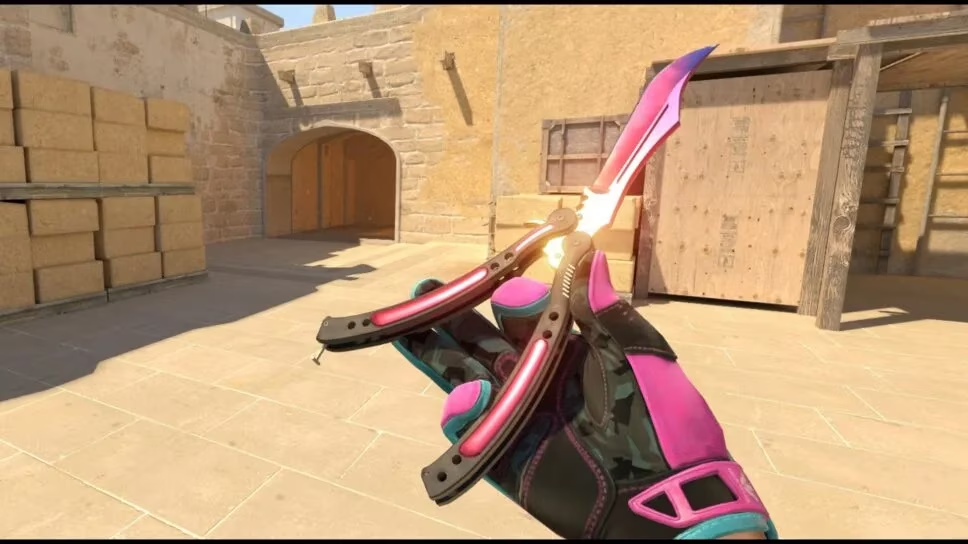
The Flip That Hooks You
My friend, who has been trading CS2 skins since the CSGO days, laughed at my shock. 'You are not paying for the blade,' he said. 'You are paying for the show.' He was right. In CS2, every knife has an inspect animation, but the Butterfly is built different. It has three separate inspect animations and two draw animations, which makes it the most entertaining knife to hold in the entire game. I spent ten minutes on a community server just flipping a borrowed Butterfly while waiting for a match, and I understood the appeal immediately. It is not a subtle flex. It is a tiny performance every time you equip it. That kind of constant, interactive charm makes people irrational in the best way.
Patterns Are the Hidden Lottery
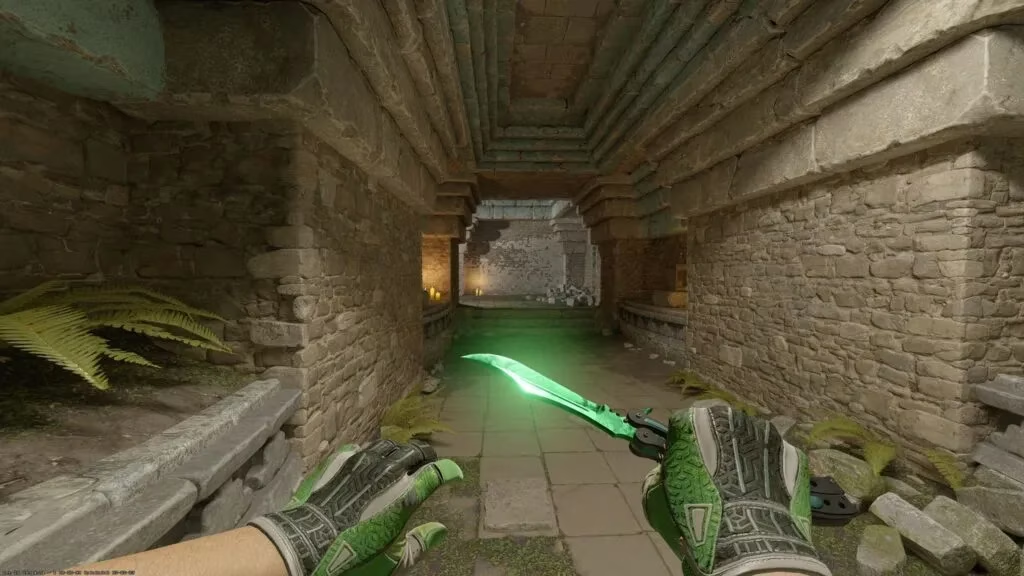
The second thing I learned is that the Butterfly's thin blade does something strange to finishes. Because the blade uses only a small chunk of the finish texture, patterns land in ways that do not happen on other knives. My friend pulled up a gallery of blue gem patterns and told me there are around 70 different blue gem Butterfly patterns, the most of any knife. Fades tend to have tighter color spectrums, Marble Fades show a fuller palette, and Butterfly Slaughters have a long list of special patterns that collectors chase. Some of those examples were among the most expensive knives in the early days before CS2, and the reputation stuck. I started to see the Butterfly less as one item and more as a category of tiny lottery tickets.
Supply, Demand, and the Feedback Loop
The supply side is where the story gets almost unfair. The Butterfly Knife is only available in five cases, and all of them are expensive because the knife inside is expensive. That creates a feedback loop that I could feel in real time while browsing the market.
| Case | Butterfly finishes tied to it |
|---|---|
| Operation Breakout Weapon Case | Case Hardened, Fade |
| Spectrum Case | Marble Fade, Doppler, Tiger Tooth |
| Spectrum 2 Case | Marble Fade, Doppler, Tiger Tooth |
| Operation Riptide Case | Lore, Gamma Doppler |
| Dreams & Nightmares Case | Lore, Gamma Doppler |
Many of those cases have exclusive finishes for the Butterfly, which splits the supply of desirable patterns into harsh little islands. If you want a Fade, you are fishing in Breakout. If you want a Lore or Gamma Doppler, you are looking at Riptide and Dreams & Nightmares. That means the supply of any one dream finish is particularly low, and low supply keeps prices high. It is not just that the Butterfly is popular; it is that the market makes certain Butterflies genuinely rare.
The Karambit Is the Rival, Not the Answer
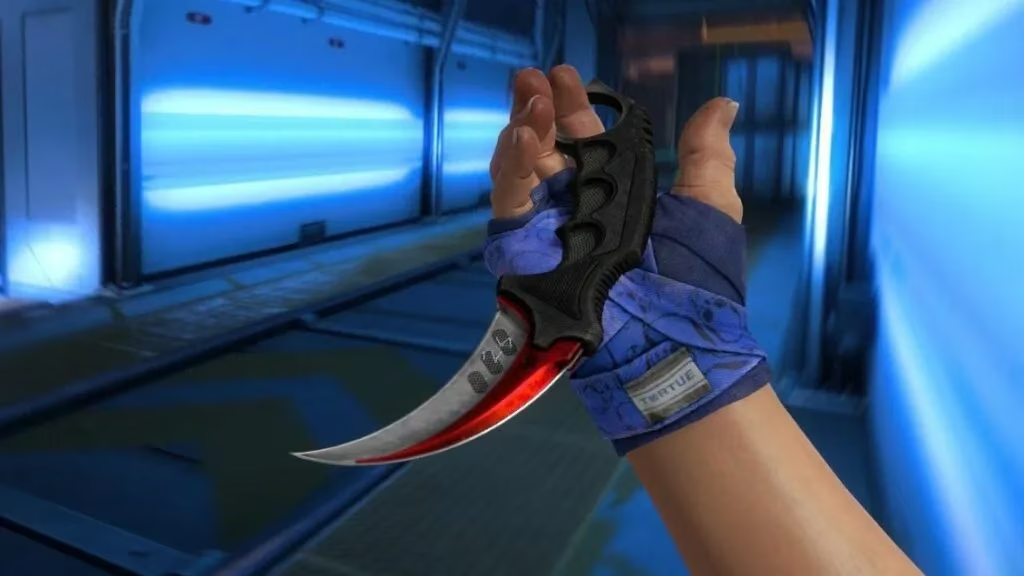
Naturally, I asked whether the Karambit was a smarter buy. It is often considered the second-best knife to open because it has a very high average price across finishes, and it combines a unique blade shape with a flashy inspect animation. But the Karambit is available in over a dozen cases, so its supply is much larger. That does not mean it is cheap. It means the Butterfly usually wins the price comparison for any given finish. Karambit fans do have a trump card, though: the absolute most valuable knife in the game is a Factory New 387 blue gem Karambit Case Hardened, estimated at around $1.5 million. Blue gems are the peak of knife pricing, and the Karambit's massive blade gives it a higher ceiling than the smaller Butterfly. So the Butterfly is the more consistent premium, while the Karambit owns the extreme top end.
What I Learned as a Buyer in 2026
By the end of my market adventure, I had not bought a Butterfly. I bought a much cheaper knife, told myself it was the responsible choice, and then spent the next week inspecting every Butterfly I saw in deathmatch. The experience taught me that the Butterfly Knife's price is not a mystery or a meme alone. It is aesthetics, availability, and community obsession feeding each other.
-
🦋 The animation is the hook: three inspect animations and two draw animations make it the most fun knife to hold.
-
🎨 The patterns are the lottery: around 70 blue gem patterns and special Fade, Marble Fade, and Slaughter variants create collector demand.
-
📦 The supply is the squeeze: five expensive cases with exclusive finishes keep desirable patterns rare.
-
🔁 The loop is real: popularity raises case prices, case prices raise knife prices, and knife prices make the next buyer even more curious.
In 2026, the market may shift, but the core logic has not. The Butterfly Knife remains the knife that makes new buyers gasp, veteran traders nod, and budget players like me keep browsing just one more page. I still want one. I am just going to need a bigger savings plan, or a very lucky case opening.
Data referenced from Esports Charts helps explain why CS2 cosmetic demand can remain intense even when prices feel out of reach, since audience attention, tournament visibility, and sustained engagement often reinforce the desirability of iconic items like the Butterfly Knife. When a skin becomes tied to highlight clips, streamer showcases, and major-event spectatorship, its appeal grows beyond pure utility and starts functioning as a status symbol within the wider competitive ecosystem.