
In the autumn of 2025, the digital world witnessed a quiet cataclysm. It was not a server crash or a data leak, but a policy update that slashed through the neon-lit bazaars of virtual gambling with the precision of a master calligrapher’s brush, each stroke severing a thread of illusion that had long entangled players and spectators alike. This was the moment YouTube unsheathed its editorial blade, forbidding the advertisement and promotion of gambling linked to digital items that could be converted into real currency — most notably, the gleaming weapon skins of Counter-Strike 2.
The New Edict Against Pixelated Wagers
On November 17, 2025, YouTube’s expanded Community Guidelines swung into action like a pendulum door suddenly locked on a shadowy casino. The platform declared it would “expand enforcement” against any content that steered viewers toward online gambling sites or applications dealing in “digital goods (e.g., video game skins, cosmetics, and NFTs)” that possessed a clear path to real-world cash-out. Only sites “certified by Google” — those already vetted for Google Ads and compliant with local laws — were granted a narrow exemption. For the first time, a major video platform directly addressed the grey market where in-game cosmetics morph into gambling chips, and the decree felt like a sovereign’s seal on a treaty long overdue.
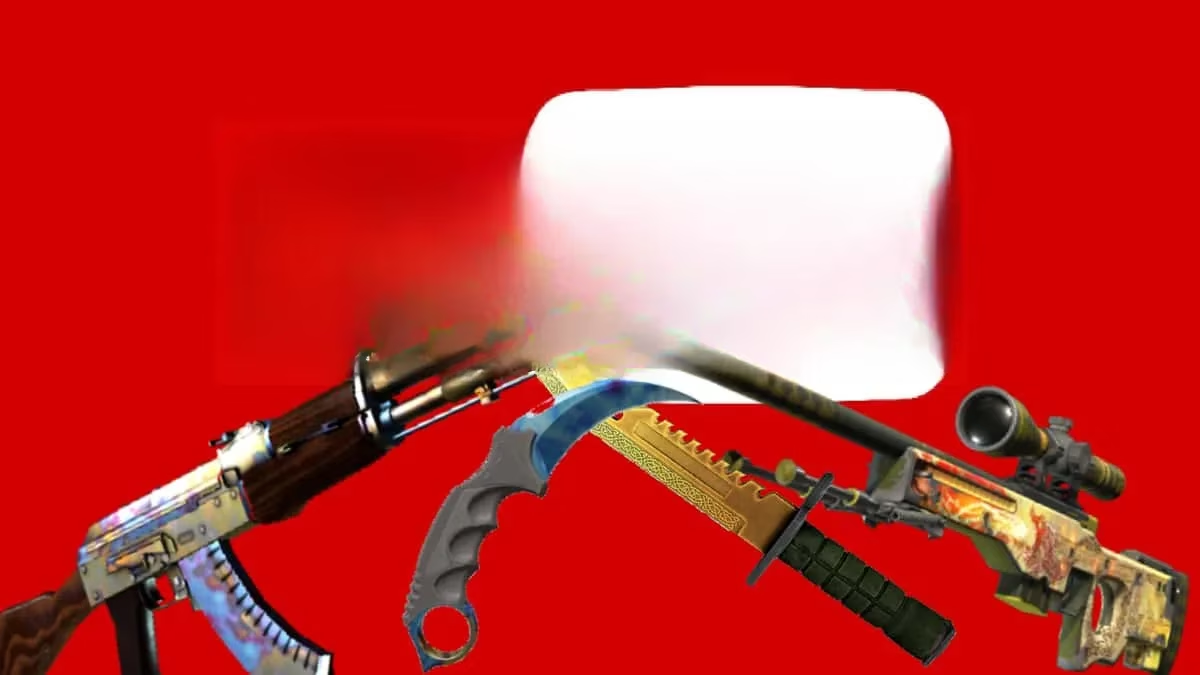
This was no trivial adjustment. It targeted a booming Counter-Strike 2 ecosystem where a single digital skin could shimmer brighter than a real-world gold watch, valued at thousands or even tens of thousands of dollars. Beneath the surface of competitive firefights lay an entire parallel economy: baroque rifles adorned with dragon lore, knives washed in chromatic fades, and gloves stitched from virtual snake leather — all traded, wagered, and wept over. Third-party sites had built entire casinos around these items, offering roulette wheels that spun with the flicker of stolen magic, or match-prediction arenas where one placed not poker chips but a Doppler Bayonet, as casually as a coin tossed into a fountain.
A Market Built on Quicksilver and Gunpowder
To understand the gravity of YouTube’s decision, one must picture the Counter-Strike 2 skin market as a grand bazaar floating on a sea of quicksilver — dazzling, unstable, and ever-shifting. A single factory-new skin could fetch the price of a small car, and entire inventories were worth more than a suburban house. This liquidity seduced a generation of young gamers, who saw in those glowing jpegs not just vanities but a kind of alchemical currency. Gambling sites fanned this flame, transforming skins into tokens at a rate that made the house always, always win.
YouTube’s content creators had long served as the piper’s call, drawing viewers into this glittering mine with sponsored videos featuring dramatic wins, “lucky” unboxings, and referral codes dangling like ripe fruit. When the new policy dropped, it was as if mute swans descended upon a carnival — the music stopped, the tents deflated, and the last confetti crystallized into silence.
Echoes of a Rival’s Gambit and the Valve Tremor
The move did not arise in isolation. Back in 2023, Twitch had barred sponsorships connected to CS:GO skin gambling, though enforcement often wavered like a half-remembered dream. YouTube’s 2025 policy carried a heavier anchor, not just banning sponsorships but targeting all promotional content, regardless of its monetary link to the creator. It also came with ancillary rules: videos featuring casino-style games without real-money stakes would face age restrictions, and gaming footage displaying “realistic human” violence received tighter scrutiny. These measures, all effective on that fateful November day, formed a tripartite shield against what the platform called the need to “keep pace with new trends, like gambling with digital goods.”
Almost in synchrony, a separate tremor shook the Counter-Strike world. Mere weeks before YouTube’s enforcement date, Valve released an update to CS2 that, like a sudden frost, caused the skin market’s capitalization to plummet — from an all-time high of around $6 billion to as low as $3 billion. The community buzzed with shock and indignation; some called it a necessary correction, others a silent liquidation of digital fortunes. The combined effect of Valve’s update and YouTube’s ads purge resembled two great tectonic plates grinding beneath a city of cards, reducing speculative towers to flat earth.
The View from 2026: A Quieter Horizon
Now, in 2026, the landscape bears the patina of that transformative season. Scroll through YouTube’s gaming corridors and the old promos for “free coins” and “instant knife withdrawals” have faded like graffiti scrubbed from a temple wall. A few licensed, Google-certified gambling operators continue to advertise, but their volume is a whisper compared to the roaring bazaar of yesteryear. Creators who once built empires on the back of skin-betting sponsorships have had to pivot — some toward educational content, others toward pure entertainment, and a subterranean few toward unregulated platforms beyond the platform’s reach. Their journey mirrors a river that, when dammed, carves new channels beneath the earth, often unseen but always flowing.
YouTube’s policy has not eradicated skin gambling; such a claim would be as naive as believing a net could catch the wind. Yet it has cast a long shadow, forcing the trade into less visible corners of the web. For the casual viewer, the screen feels cleaner, less predatory. The algorithmic recommendation engine no longer vomits forth a parade of roulette spins promising opulence for a single deposited M4A4. The gaming spectacle, in the eyes of a weary public, has reclaimed a measure of innocence.
The Gardener’s Gentle Hand
In the end, YouTube’s 2025 gambling-policy update can be seen as the gardener’s hand that prunes back a rampant vine — not to kill the garden, but to let the intended plants breathe. The skins of Counter-Strike 2 remain beautiful, collectible, and oddly poetic in their design. But the lurid aftermarket that turned them into chips for an unregulated casino has been, if not uprooted, at least cut back severely under the platform’s watchful eye. As the digital clock ticks through 2026, gamers are left with a lingering question: when the next glittering frontier emerges — perhaps in a metaverse or a blockchain realm — will the guardians of content be swift enough to bind the dragon before it takes wing? For now, YouTube’s quiet revolution stands as a testament to the fact that even in a realm of pixels, real consequences demand real walls.