
Reports of unjustified VAC bans surged within hours of the latest Counter-Strike 2 update and the start of Premier Season 4, leaving a trail of confused and frustrated players. On January 23, 2026, Valve confirmed through a brief patch note that it had “fixed an issue that led to a small number of users to erroneously receive a VAC ban. Those bans have been reversed.” The swift acknowledgment came after dozens of players took to social media platforms like X and Reddit, sharing screenshots and clips of their accounts being struck by Valve’s anti-cheat system immediately after the update rolled out.
The sheer volume of complaints made this event stand out. While hundreds of thousands of players continued enjoying the beloved FPS without incident, the sudden flood of (supposedly) wrongful bans was unusual. One X user lamented, “Got a VAC ban in CS2 after the new update. 1,500 hours playing legit down the drain,” attaching screenshot evidence. Another player echoed the sentiment, claiming to have “2,558 hours played legit, no third-party software.” Yet, it was the ban of a map creator that truly captured the community’s attention.
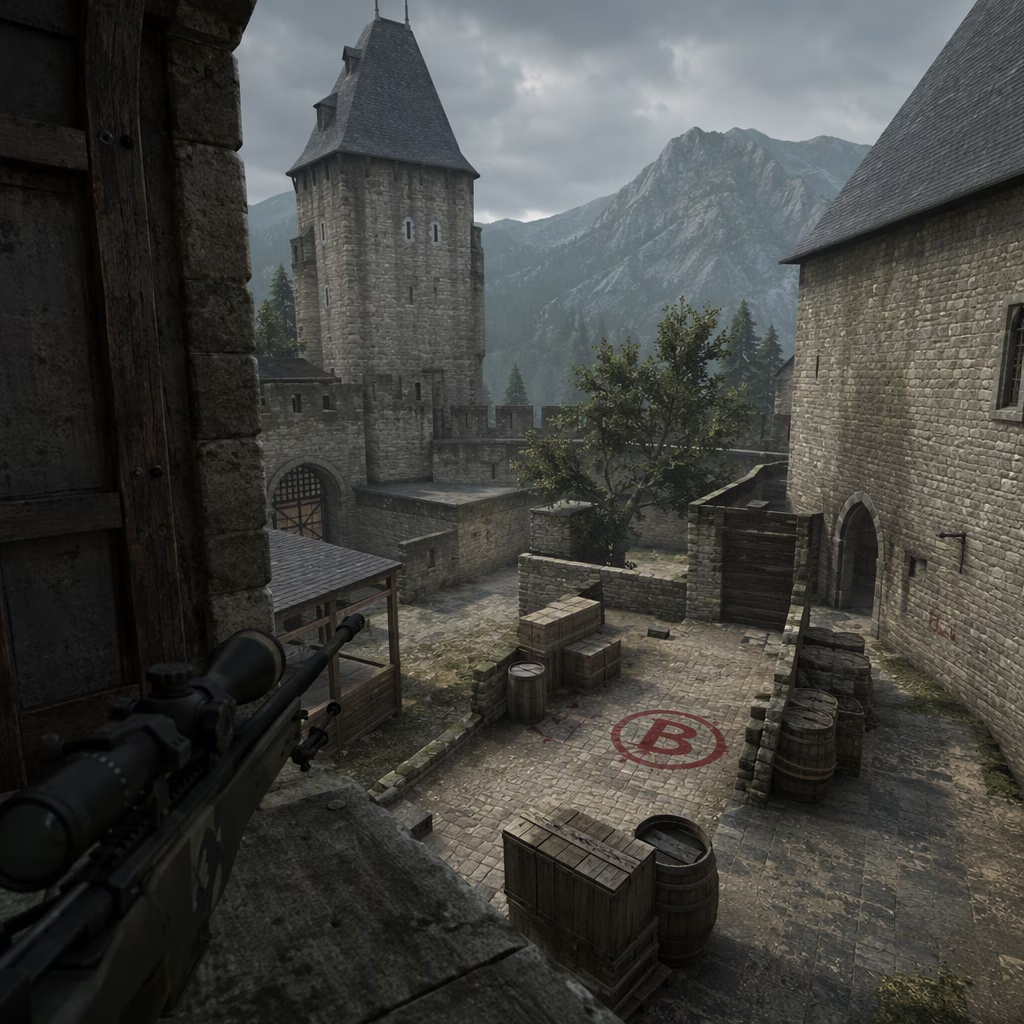
Timur Aisin, a designer of the Alpine map — one of three community maps freshly added to Competitive, Casual, and Deathmatch modes in this very update — found himself VAC banned mid-match on his own creation. “I literally got VAC banned on my own map lmao,” Aisin posted on X, accompanied by a clip of the ban occurring in real time. The irony was impossible to ignore: a trusted contributor to the official map pool receiving a permanent anti-cheat penalty without warning. Could there be a more startling signal that something was deeply wrong?
VAC bans in Counter-Strike 2 carry a fearsome reputation: they are permanent and nearly impossible to overturn through standard appeal channels. The only real hope for innocent players lies in Valve itself acknowledging a mistake. This had happened once before, as recently as December 8, 2025, when a tiny CS2 update patch note admitted it had “fixed a case that caused a small number of users to receive an erroneous VAC ban. The bans will be removed.” That earlier incident was minor, but the January 2026 wave felt significantly more widespread — and more public. The involvement of a high-profile community figure like Aisin added weight to the cries of illegitimacy.
The timing raised important questions for 2026’s competitive scene. Premier Season 4 had just begun, and any false ban meant players were instantly locked out of ranked play, item trading, and all multiplayer modes. For veteran accounts with thousands of hours, the emotional toll was severe. How can a player trust the system when a routine update could flag a clean account? Valve’s quick reversal on January 23 was a relief, but the incident highlighted a recurring fragility in automated anti-cheat enforcement.
Was this just a bug, or a sign of a more aggressive VAC detection update that misfired? The patch notes offer no technical details, leaving room for speculation. One theory is that the update included new heuristic checks designed to catch previously undetected cheats — and these checks mistakenly flagged legitimate players due to a configuration error or an interaction with common third-party software. Another possibility is that the false bans were purely a server-side glitch, unrelated to any permanent system changes. Without official elaboration, the community is left connecting dots from Valve’s brief statement.
The December 2025 precedent gives some comfort: Valve has shown it can identify and reverse erroneous VAC bans. However, the recurrence of the problem less than two months later suggests that whatever safeguards exist still need refinement. For players, the takeaway is a bittersweet reminder that even the harshest anti-cheat system can falter, and that vigilance — both from the community and the developer — remains essential. As Premier Season 4 marches on, the incident will likely fuel debates about the balance between aggressive cheat detection and the risk of collateral damage.
In the end, the affected players got their accounts back, and the status quo was restored. But the lasting image of a map designer being banned on his own map will serve as a cautionary tale. It underscores just how disabling a false positive can be in a digital ecosystem where reputation and inventory value hang in the balance. For now, CS2 continues to thrive, but the echo of those 1,500 hours “down the drain” will linger in forums and Discord servers, a stark reminder that even guardians need a watchful eye.