
The global video game industry finds itself at a crossroads, with a fiery debate raging over the nature of in-game loot boxes. Are they harmless surprises or a digital form of gambling? Governments worldwide are grappling with this question, with significant financial stakes on the line. In 2026, this debate has reached a pivotal moment, particularly in Europe, where two nations have taken a definitive and hardline stance. The Netherlands and Belgium, through their respective gaming authorities, have officially classified certain loot box mechanics as gambling, leading to an outright ban. This regulatory action has forced game publishers to adapt swiftly, with one of the world's most popular shooters, Counter-Strike: Global Offensive (CS:GO), implementing a direct and controversial solution.
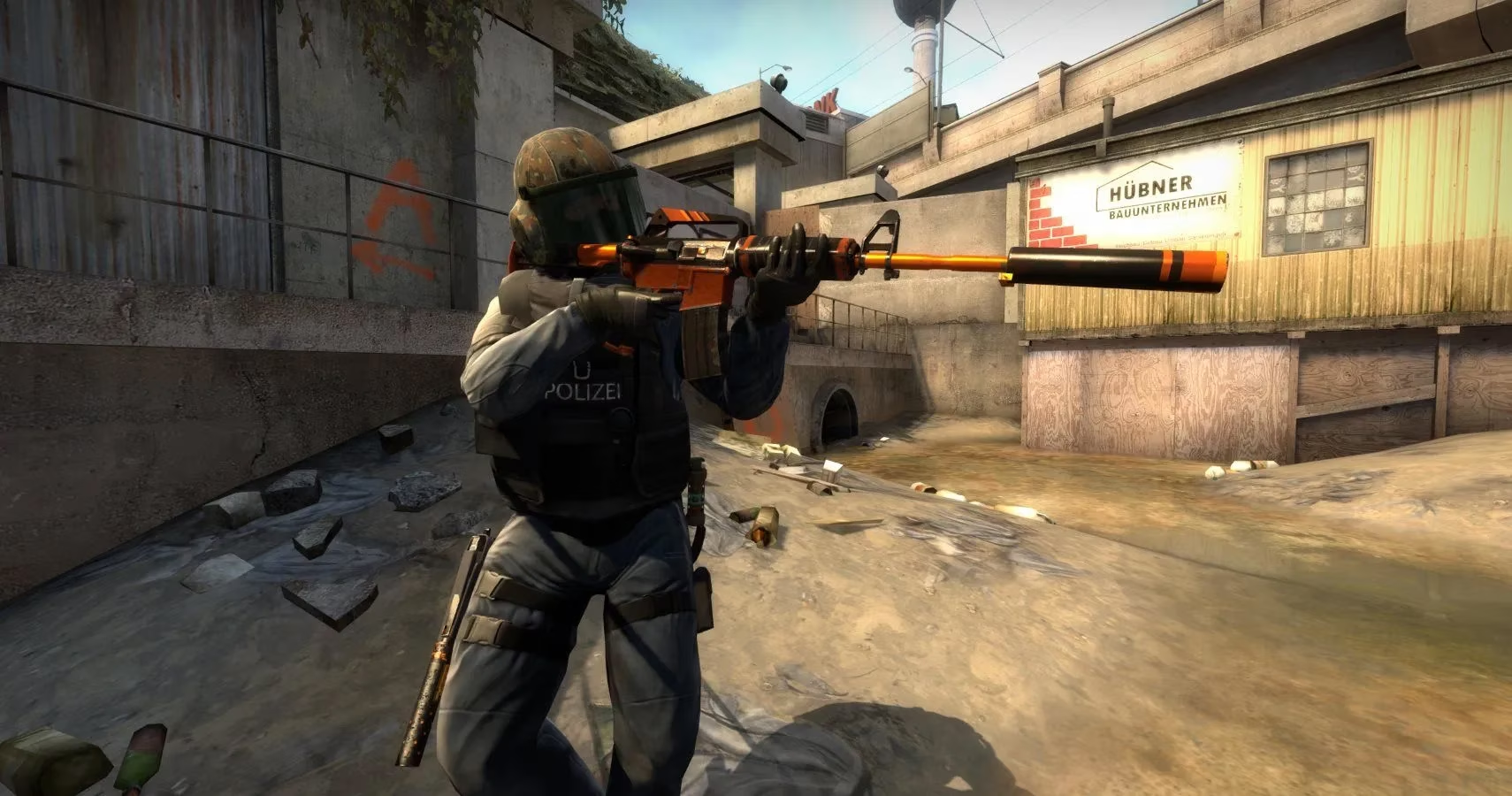
The Regulatory Crackdown: Why Belgium & The Netherlands Said "No More" 🚫
The Dutch Gaming Authority and the Belgian Gaming Commission conducted thorough investigations into loot box systems. Their conclusions were strikingly similar and damning. They identified core mechanics that mirrored traditional gambling:
-
The Element of Chance: Rewards are determined purely by random algorithms.
-
The "Sunk Cost" Hook: Players are psychologically incentivized to spend repeatedly for a chance at a rare, desired item.
-
Monetization of Uncertainty: Real money is exchanged for an unknown outcome.
These findings led both bodies to recommend a ban to their governments, which was enacted earlier this spring. Game companies were given a deadline to comply, setting the stage for a major industry response. For players in these regions, the days of buying a key with bated breath to unlock a digital container were officially over.
Key Takeaway: The bans are not against microtransactions in general, but specifically target systems where payment grants a randomized reward of unknown value.
Valve's Response: A Digital Border Wall for Loot Boxes 🔒
Faced with this legal ultimatum, Valve, the developer behind CS:GO, chose a path of minimal compliance but maximum player impact. Instead of redesigning its loot box system for these markets, Valve implemented a geographic block. In a recent game update, it was announced that "customers in the Netherlands and Belgium will be restricted from opening containers." This means any loot boxes or keys already in the inventories of players from these countries became instantly non-functional within their borders.
The community reaction was immediate and mixed. On forums and social platforms, players debated workarounds, such as using VPNs or traveling to neighboring countries like Germany to access their accounts. However, most legal experts and community managers warned that such actions would likely violate the game's Terms of Service and could result in account penalties. Valve's solution was simple, effective, and arguably blunt, drawing a clear digital line in the sand.
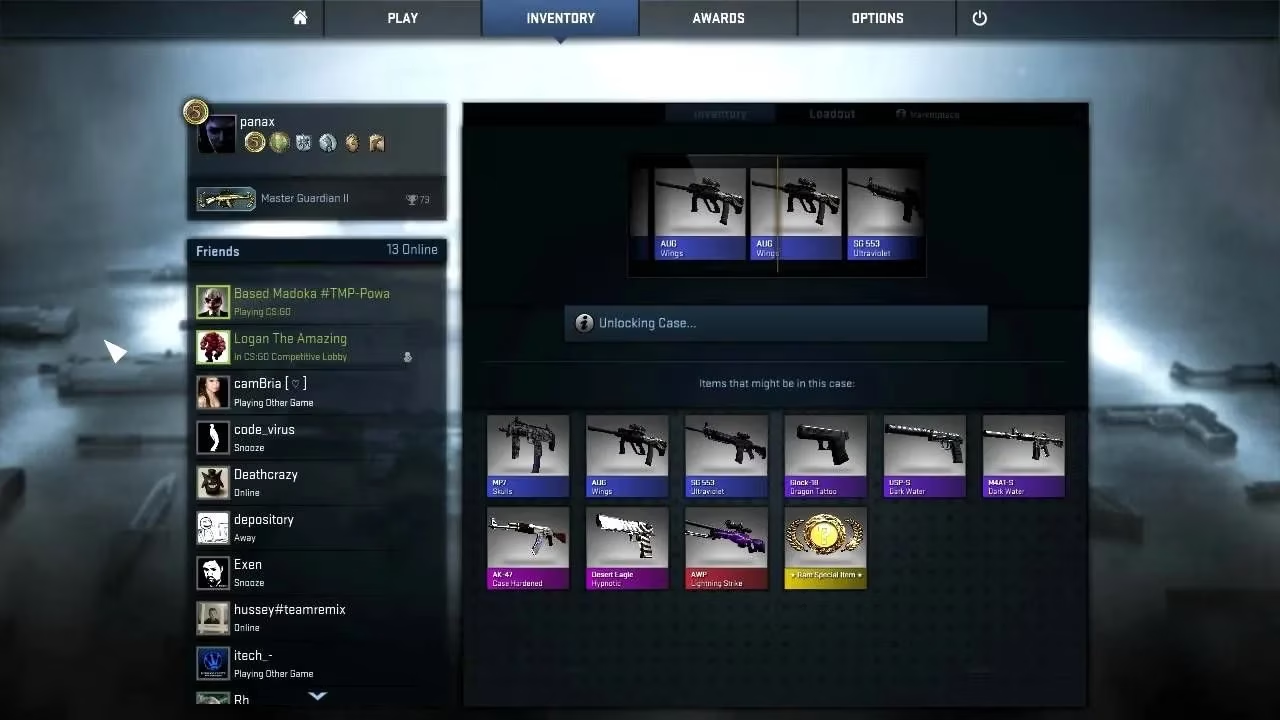
The Ripple Effect: Market Access Restored & Financial Implications 💰
To mitigate the frustration of players who could no longer engage with the core loot box loop, Valve concurrently re-enabled access to the Steam Community Market and Steam Trading for Dutch and Belgian accounts. This allowed a crucial alternative: players could now directly purchase the cosmetic skins, knives, and weapon finishes they wanted from other players in a transparent, fixed-price marketplace. This move shifted the economy from chance-based acquisition to a straightforward commercial model within those regions.
However, this shift poses a significant financial puzzle for Valve. A substantial portion of CS:GO's revenue historically came from the sale of keys used to open loot boxes, with Valve taking a percentage of every transaction. The ban directly cuts off that revenue stream from two European markets. The current strategy suggests Valve is willing to absorb this loss rather than overhaul its global monetization system. Yet, the looming question remains: what if more European Union member states follow suit? A broader EU-wide ban on loot boxes could force Valve and other publishers into a complete and costly systemic redesign.
The Global Landscape & What It Means for Gamers 🌍
The actions in the Benelux region are part of a larger, ongoing global conversation. Other countries and regions are closely monitoring the outcomes and legal precedents being set.
| Region/Country | Current Stance on Loot Boxes (as of 2026) |
|---|---|
| United Kingdom | Under review by regulators; increased pressure for age ratings and transparency. |
| United States | State-level legislation proposed; industry self-regulation via ESRB labels persists. |
| China | Mandatory disclosure of item drop rates has been law for several years. |
| Japan (Kompu Gacha) | Has strict laws against certain "complete the set" gacha mechanics, influencing design. |
For the average player, this evolving landscape means greater awareness and potential protection. The debate has pushed topics like player psychology, spending transparency, and ethical game design to the forefront. While the immediate effect for Dutch and Belgian CS:GO fans is the loss of the "thrill of the unboxing," it has granted them market certainty. For the rest of the world, it serves as a potent case study in how corporate giants respond to consumer protection laws.
In conclusion, Valve's decision to region-lock loot box access is a landmark moment in the intersection of gaming, law, and business. It highlights the tension between globalized game services and localized legal frameworks. As we move further into the decade, the resolution of this tension will undoubtedly shape the future of live-service games, monetization, and what is considered fair play in the digital arena. For now, the message from two European nations is clear: when it comes to blending chance and real-money transactions, the house doesn't always get to make the rules. 🎮⚖️