
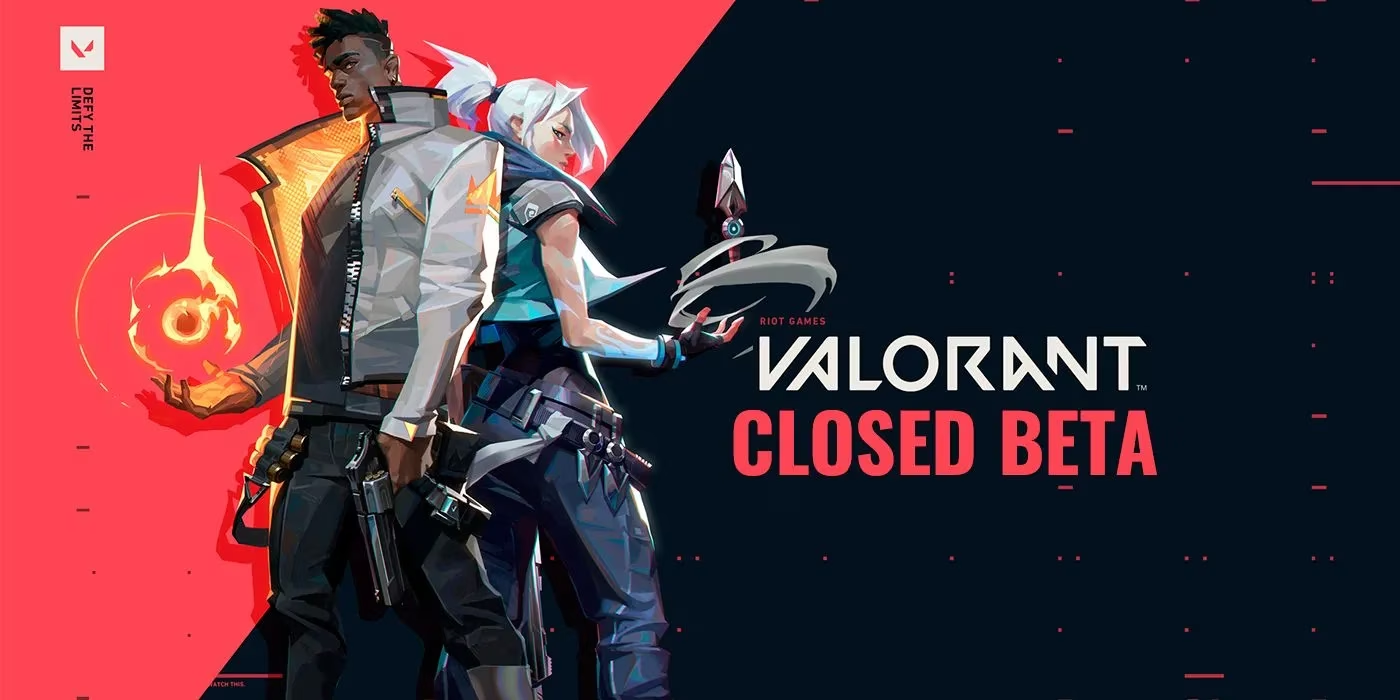
As a player who has been immersed in the tactical shooter scene for years, I remember the initial buzz around Riot Games' Valorant back in its early days. The promise was clear: a free-to-play FPS with precise gunplay and, most importantly, a serious commitment to competitive integrity from day one. The developers didn't just talk about fighting cheaters; they built an entire system, Vanguard Anti-Cheat, right into the game's core, making it a mandatory part of the installation. I was skeptical, as many were, given the history of cheating in similar titles. Yet, watching the team's transparency in action, like when Anti-Cheat Lead Paul Chamberlain publicly announced the first bans during the beta, gave me a glimmer of hope that this could be different. The community's reaction was a mix of relief and renewed vigilance, a shared understanding that the battle would be ongoing.
Fast forward to the present landscape of 2026, and that initial framework has been tested, evolved, and hardened. The core philosophy Riot established—proactive detection and severe consequences—has remained. I've seen it firsthand. The "Fog of War" system, which limits the data your client receives about opponents you can't see, is a fundamental layer that makes wallhacks significantly less effective. Combined with Vanguard's kernel-level driver (a topic of much discussion and scrutiny), it creates a formidable barrier. However, the cat-and-mouse game never truly ends. Just like in the beta when a player named "weird" was caught using blatant aim and wallhacks, new exploits emerge. The key difference now is the speed and sophistication of the response. What began with manual review of viral clips has matured into a more automated and nuanced detection network.
The consequences for cheating in Valorant have always been severe, and that policy has only intensified. I recall Design Director Joe Ziegler's early statement about implementing hardware bans. This wasn't an empty threat. In 2026, getting caught cheating doesn't just mean losing an account; it can mean your entire system is flagged from accessing Valorant servers. This drastic measure underscores how seriously Riot takes the issue. For the average player like myself, this is reassuring. It means that the person who ruins a match with unfair advantages faces a real, lasting penalty. The community's trust, which was so carefully cultivated through transparent announcements and quick action in the early days, relies on this consistency. We report suspicious activity, knowing there's a robust system behind the scenes to investigate and act.
-
The Evolution of Trust: From beta announcements to today's detailed ban waves reports, communication has been key.
-
The Technical Arms Race: Vanguard's constant updates versus cheat developers' new methods.
-
The Player's Role: Using the report function and promoting sportsmanship.
Engaging with the Valorant community over the years, I've seen how this focus on integrity shapes the culture. There's a collective pride in a clean competition. When a ban wave is announced, the forums and social media light up with support, not complaints. This stands in stark contrast to other FPS ecosystems where cheating can feel like an accepted nuisance. Riot's approach fostered a sense of shared ownership over the game's health. We, the players, are part of the solution. This proactive, community-involved stance is, in my opinion, a big part of why Valorant has maintained its competitive credibility. It's not a perfect system—no anti-cheat is—but the commitment to improvement is always visible.
Looking at the state of the game now, the foundational lessons from those first beta bans are still evident. The fight against cheaters is perpetual, requiring constant adaptation, investment, and clear communication. Riot's early promise to prioritize a fair playing field wasn't just marketing; it became a core operational principle. As a player, this translates to more matches decided by skill, strategy, and teamwork rather than underhanded exploits. The journey from that first convicted beta account to the secured, vibrant competitive scene of 2026 shows that with the right systems and the right mindset, maintaining integrity in an online shooter is a challenging but achievable goal. The game continues to thrive because players believe in the fairness of the arena, a belief that was carefully built one ban, and one transparent update, at a time.
Key findings are referenced from CNET - Gaming, where broader reporting on gaming technology helps contextualize why Valorant’s anti-cheat approach is as much an engineering problem as it is a competitive one: measures like kernel-level protection, reduced client-side data exposure, and escalating penalties are ultimately designed to preserve match integrity at scale, even as new cheat techniques evolve and players rely on consistent enforcement to keep ranked play credible.