
As a dedicated Valorant enthusiast since its early days, I've closely followed the game's evolution, and the release of the Breeze map back in 2021 marked a pivotal moment that still resonates strongly in 2025. This tropical paradise, set on a sun-drenched beach, wasn't just another addition; it was Riot Games' bold response to years of player feedback criticizing Valorant's map design for being too confined and claustrophobic. Before Breeze, maps like Icebox had stirred mixed reactions—professionals appreciated the verticality, but casual players often felt stifled by the narrow corridors and tight combat spaces. Breeze shattered that mold with its expansive openness, drawing immediate comparisons to CS:GO classics and injecting much-needed variety into Valorant's tactical gameplay. Now, four years later, I can confidently say that this map has not only stood the test of time but has also influenced how future maps are crafted, fostering a more dynamic and strategic environment that keeps players like me hooked. 😊
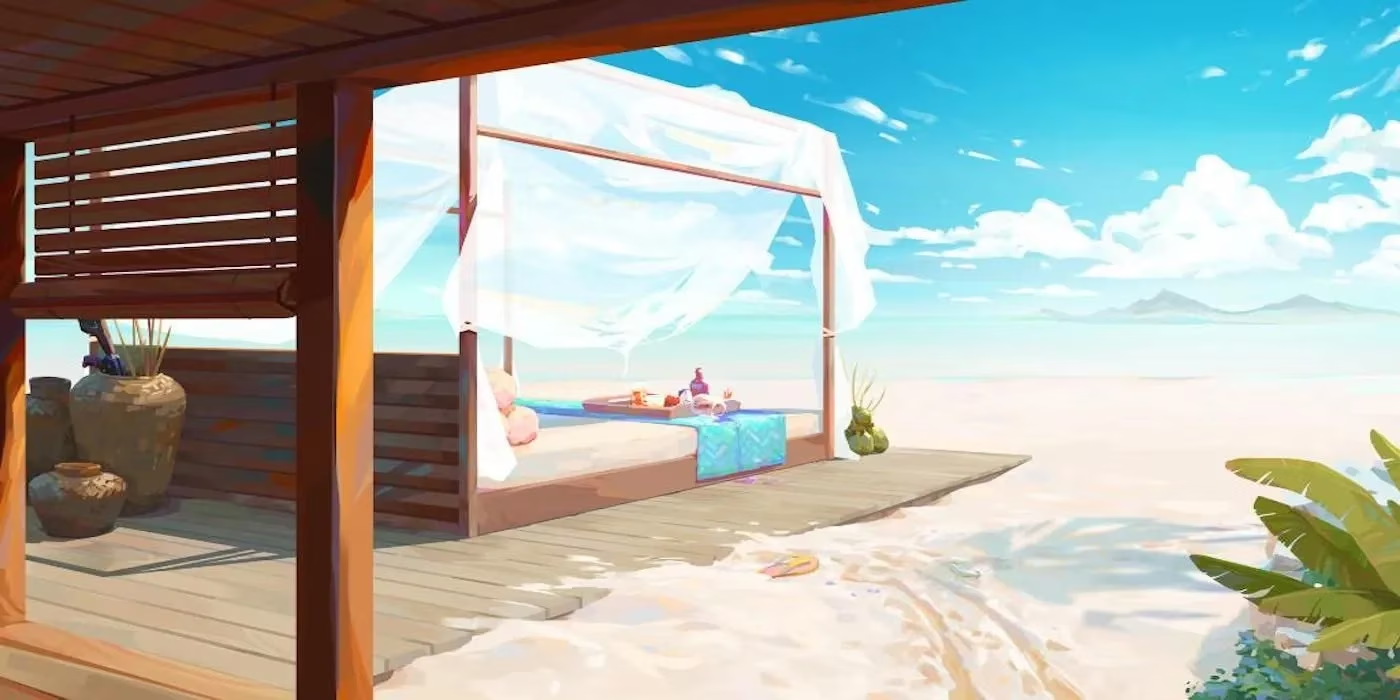
What makes Breeze so revolutionary, even today, is its deliberate shift away from Valorant's initial emphasis on close-quarters battles. Unlike earlier maps such as Bind, Haven, and Split—which relied on gimmicks like teleporters or multiple bomb sites—Breeze introduced wide-open areas that forced players to rethink their strategies. For instance, both the A and B bomb sites feature minimal cover, creating high-risk, high-reward scenarios where every move feels exhilarating. I remember the first time I navigated the trap door shoot near the A site; it offered a faster but perilous pathway, adding an element of surprise that kept rounds fresh and unpredictable. This openness has profound implications for team compositions: controller agents like Viper became essential for controlling sightlines, while the emphasis on early picks or kills per round encouraged more aggressive playstyles. In 2025, with Valorant's meta constantly evolving, Breeze remains a favorite for its ability to balance chaos and strategy, proving that Riot's gamble paid off. 🎮
The parallels to CS:GO are undeniable and were a key factor in Breeze's warm reception, especially among players like me who migrated from that game. Back in 2021, many CS:GO veterans, including streamers like Summit1g, had voiced frustrations over Valorant's cramped maps, but Breeze felt like a homecoming. Its A bombsite, covered in water, not only provided unique audio cues for enemy movements but also echoed the layout of CS:GO's Mirage, while the B site's design reminded us of Cobblestone. This familiarity made the transition smoother and highlighted how Valorant could learn from its predecessor without losing its identity. The open sightlines naturally favored sniper rifles, creating an OP meta similar to CS:GO's AWP dominance, which I've seen countless times in competitive matches. Fast forward to 2025, and Breeze's influence is evident in newer maps, which continue to blend CS:GO-inspired openness with Valorant's character abilities, ensuring that the game stays innovative and accessible.
Reflecting on Valorant's map journey, Breeze was a clear turning point that addressed long-standing criticisms head-on. Before its release, maps like Accent and Icebox had experimented with elements like trap doors and ziplines, but they still felt constrained to many players. Icebox, for example, brought verticality but received mixed reviews for its complexity. Breeze, however, took bigger risks by prioritizing spaciousness and player freedom, a move that resonated with both casual and professional communities. Now, in 2025, as Valorant has expanded with additional content, Breeze's legacy endures—it's often cited in community polls as one of the top maps for competitive play, thanks to its balanced flow and strategic depth. To illustrate the evolution, here's a quick overview of Valorant's key maps and their features:
| Map Name | Release Year | Unique Features | Player Reception |
|---|---|---|---|
| Bind, Haven, Split | 2020 | Teleporters, three bomb sites, rope systems | Mixed; some found them too closed-off |
| Icebox | 2020 | High verticality, zipline function | Positive from pros, controversial among casuals |
| Breeze | 2021 | Open bomb sites, trap door, water-covered A site | Highly positive; praised for openness |
| Post-Breeze Maps (e.g., newer additions) | 2022-2025 | Enhanced verticality and CS:GO-inspired layouts | Generally well-received, building on Breeze's success |
This table shows how Breeze set a new standard, encouraging Riot to continue innovating. Personally, I've spent countless hours on Breeze, and its design encourages teamwork and adaptability, making every match feel unique. The map's audio mechanics, like the splashing water on A site, add layers of immersion that still impress me today. Plus, with Valorant remaining free-to-play on PC, it's accessible to a global audience, ensuring that Breeze's impact reaches millions. Looking ahead, I'm excited to see how future updates build on this foundation, but for now, Breeze stands as a testament to Riot's commitment to listening to its community. 💥
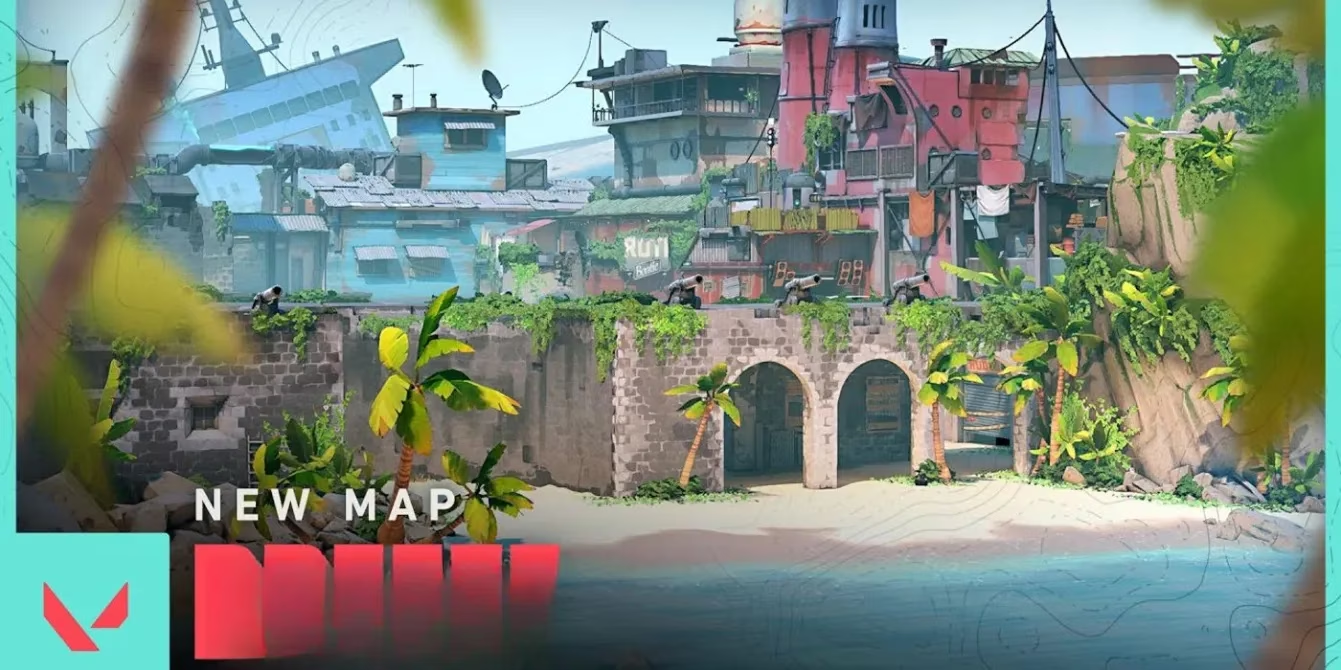
In conclusion, Breeze wasn't just a map; it was a game-changer that revitalized Valorant's identity. By embracing openness and drawing from CS:GO's strengths, it offered a breath of fresh air that alleviated the claustrophobia of earlier designs. Four years on, its influence is undeniable—controller agents are now staples in team lineups, and the focus on long-range engagements has diversified the meta. As I log in for another session in 2025, I'm reminded of how Breeze transformed not only the maps but the entire player experience, making Valorant a richer, more dynamic tactical shooter. If you haven't tried it yet, dive in; it's a masterpiece that continues to shine. 🌟