
In the digital arenas of 2026, where frames flicker faster than thoughts and victory is measured in milliseconds, a profound truth about the human condition continues to resonate. A landmark study from the University of Leeds, once a beacon in the early 2020s, has evolved into foundational lore for the gaming community, reminding us that not all virtual battles are created equal in the theater of the mind. Gaming, that quintessential modern sanctuary, is a paradox—a crucible where relaxation and rigorous challenge forge an uneasy alliance. For every player seeking solace in the glow of their monitor, there exists a heart whose rhythm is dictated by the digital dance of bullets and strategy. It’s a world where, ironically, the quest for a chill session can sometimes lead you straight into the firefight of frayed nerves.
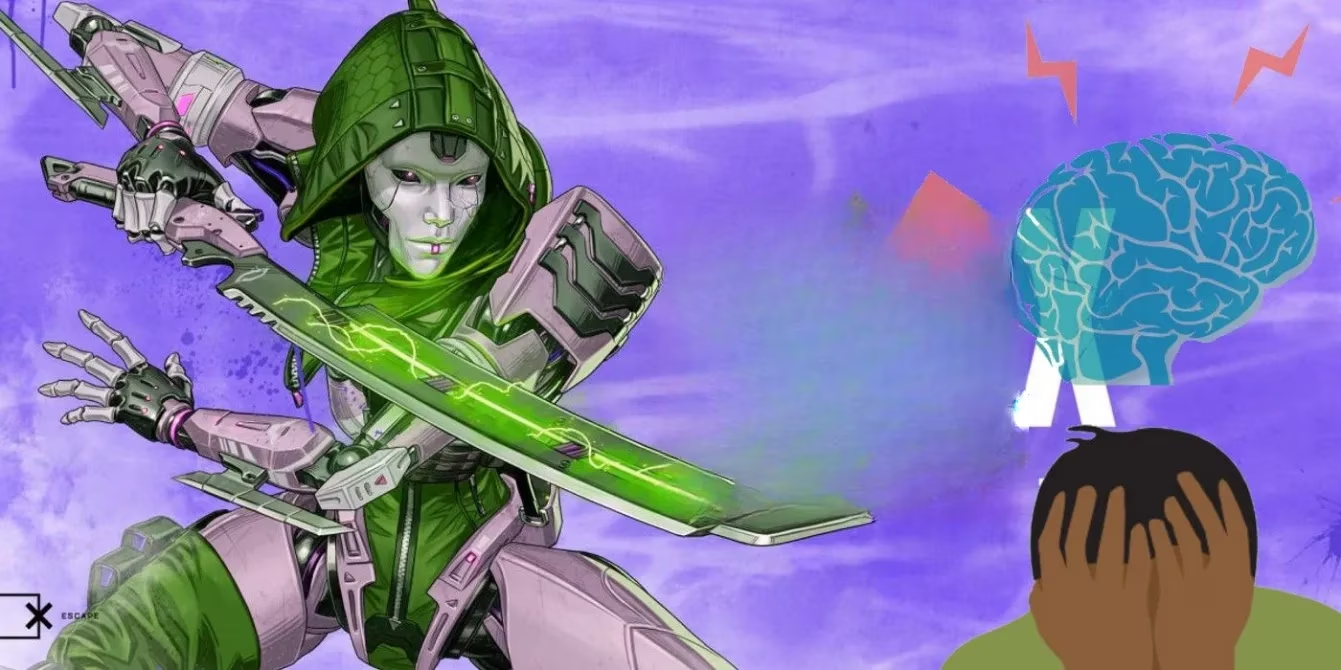
The poetry of play is written in biometrics. The original Leeds research, a pioneering effort, peered into the souls of 32 players through the windows of their heart rates, anxiety levels, and blood pressure. These modern-day gladiators, aged 20-26 and ranging from 'good' to 'expert,' served as the muses for this symphony of data. Their digital odysseys across four iconic titles—Counter-Strike: Global Offensive, Call of Duty: Warzone, PUBG, and Apex Legends—were not just games; they were emotional landscapes, mapped by the steady beep of a heart monitor. The findings, oh, they were a real plot twist, a genuine 'wait, what?' moment for the community.
The Champions of Calm & The Kings of Chaos: A 2026 Breakdown
Let's cut to the chase and break down what the data sang, and how its melody echoes into the present gaming landscape.
| Game Title | Legacy Stress-Relief Rank (Study) | Core Gameplay Loop | The 2026 Vibe Check |
|---|---|---|---|
| Counter-Strike: Global Offensive | 🥇 #1 for Stress Relief | Tactical, round-based, economy management | The old reliable, the digital zen garden. Still the go-to for measured, strategic exhales. |
| PUBG (PlayerUnknown's Battlegrounds) | 🥈 #2 for Stress Relief | Methodical battle royale, loot-centric survival | The slow burn. Tension that builds and releases, like a well-written thriller novel. |
| Call of Duty: Warzone | 🥉 Moderate Stress Impact | Fast-paced battle royale, loadout-focused action | The adrenaline shot. A rollercoaster that leaves you buzzing, for better or worse. |
| Apex Legends | 🏅 Most Stress-Inducing | High-mobility hero battle royale, team synergy imperative | The ultimate gauntlet. A beautiful, punishing ballet that keeps your fight-or-flight on standby. |
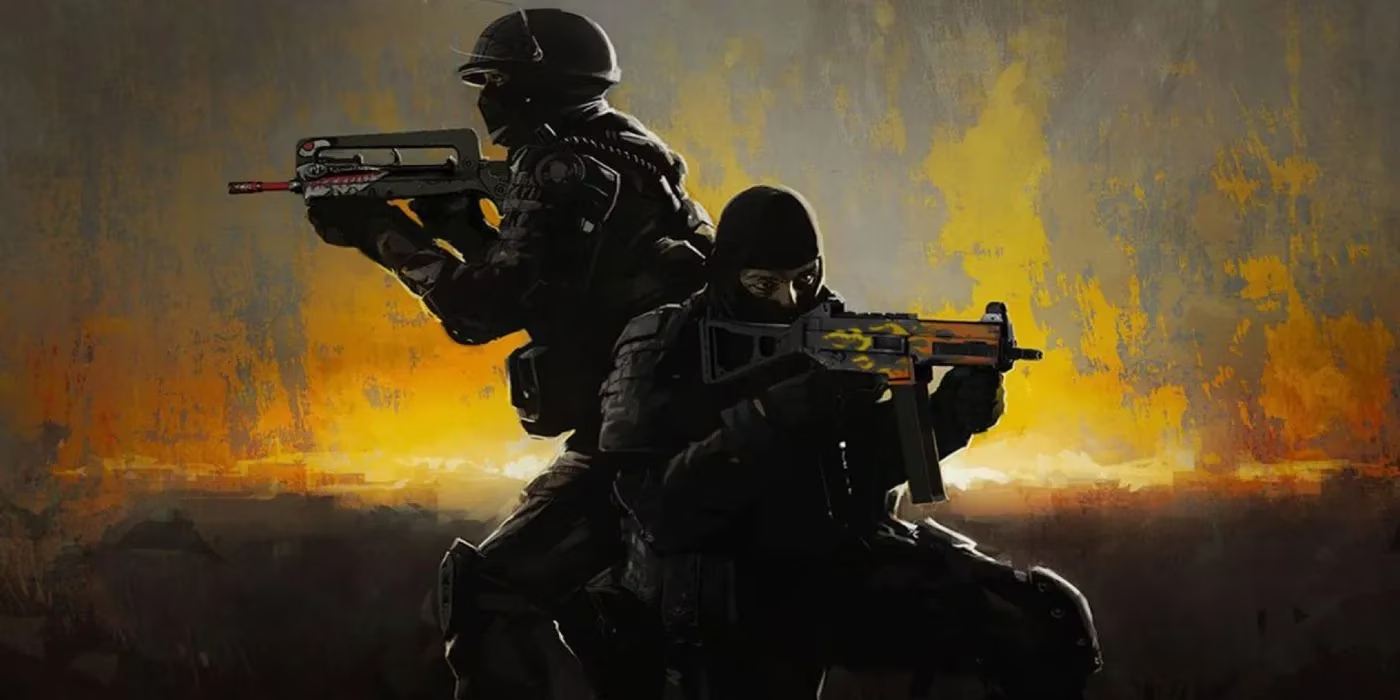
The crown for serenity, surprisingly, went to the venerable CS:GO. Players entered the fray with high-stress levels and emerged, statistically, significantly more chilled out. It was the only game in the study to show an overall reduction in average heart rate. Talk about a clutch performance for mental wellness! On the flip side, Apex Legends stood in stark contrast. The data graph for its players showed almost no movement—a flatline of stress relief. It was as if the game said, "The stress you brought is the stress you keep." No cap.
Decoding the Digital Pulse: Why the Divide?
So, what's the secret sauce, or lack thereof? The study offered poetic clues that still hold water in 2026:
-
The Architecture of Anxiety: CS:GO’s round-based structure is everything. It provides natural, consistent breaks—mini-respites between the storms. You win or lose a round, you breathe, you buy, you plan. It’s a rhythm. The three other titles? All battle royales. They trade that rhythm for a relentless, uninterrupted possibility of danger. From drop to finale, the sword of Damocles is always swinging. There's no safe zone in the mind, even if one exists on the map.
-
The Burden of Legacy & The Weight of Meta: In 2026, the evolution of these games adds layers. Apex Legends, with its ever-expanding roster of Legends, intricate movement tech, and emphasis on perfect team synergy, demands a form of continuous, multidimensional calculus. It’s not just about shooting; it's about orchestrating abilities, mastering momentum, and communicating in a language of pings and calls. The cognitive load is, frankly, massive. One misstep, one failed synergy, and it's back to the lobby. That's a recipe for sustained tension.
-
The Psychology of Investment: CS:GO and PUBG often feel like a test of patience and positioning. Apex Legends feels like a test of identity—your chosen Legend's identity and your own skill ceiling. The personal investment is different, more intimate, and thus, the sting of failure can feel more acute.
The Gamer's Prescription for 2026 and Beyond
This isn't about labeling games as 'good' or 'bad.' Stress in gaming isn't inherently a villain; for many, that edge-of-your-seat tension is the whole point—the raison d'être. It's about self-awareness and choice. The study, and its lasting implications, offer a guide:
🎯 Know Thyself: After a grueling day, seeking an unwind? Maybe don't jump straight into the Apex grind. A few rounds of CS:GO or a tactical PUBG session might be the better digital nightcap.
🎯 Embrace the Palette: Variety is the spice of (gaming) life. Balance your high-octane, heart-pounding sessions with games that offer a different pace. Your nervous system will thank you.
🎯 Listen to the Beat: Be mindful of how a game makes you feel physically. That clenched jaw, quickened breath, or tense shoulders are biometric data points telling their own story.
In the end, the virtual battlefield is a mirror, reflecting not just our reflexes, but our rhythms. The University of Leeds study peeled back a layer to show us that in the silent war between pixels and pulse, some arenas are temples of focus, while others are coliseums of constant thrill. As we game on into the future, understanding this internal landscape is the ultimate power-up. It’s not just about getting good; it’s about feeling good, too. And sometimes, feeling good means knowing when to drop into a match that lets your heart rate drop along with you.
Comprehensive reviews can be found on GamesRadar+, which frequently explores the psychological impact of competitive gaming. Their editorial team has analyzed how titles like CS:GO and Apex Legends create distinct emotional experiences, echoing the University of Leeds study's findings on stress and relaxation in FPS environments.