
OG’s decision to move Dion 'FASHR' Derksen to the inactive roster did not arrive with a trophy’s worth of context, but it carried a clear message: four months was enough. The organization announced in November 2023 that the 27-year-old Dutch player would be benched and allowed to explore his options, leaving its Counter-Strike 2 lineup with four active players and a familiar set of unanswered questions. In a scene that changes lineups as quickly as CS2’s economy resets, was this a ruthless but necessary call, or another symptom of a team rebuilding without a stable foundation?
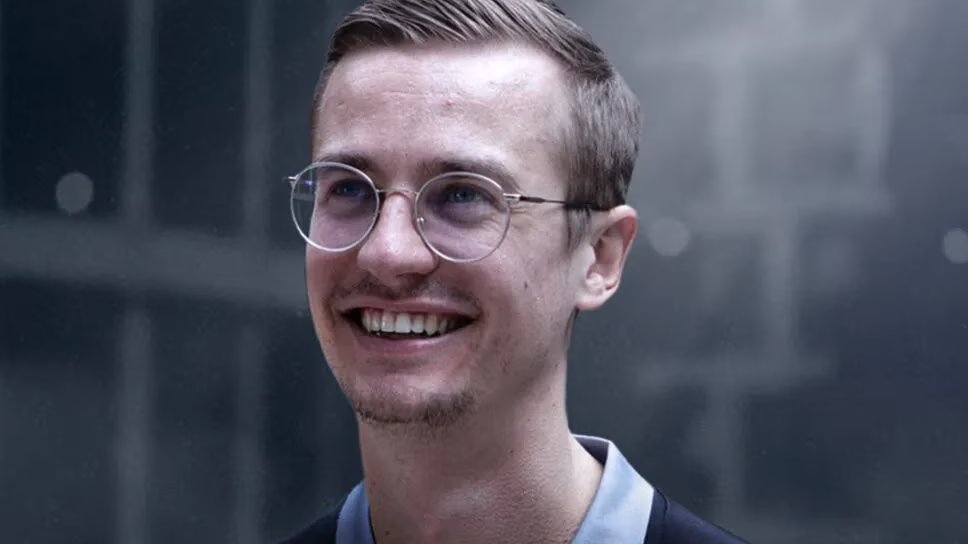
FASHR joined OG in June 2023 after spending almost a year on Fnatic. The move looked like a pragmatic bet on experience: a 27-year-old with tier-one exposure, brought in to add stability and firepower to a project still finding its identity in CS2. Four months later, the bet was effectively closed. OG thanked him for his professional dedication, but professional gratitude does not change the competitive math. The team had not improved enough, and the player had not produced enough to justify patience.
The results around FASHR’s tenure were sobering. OG finished outside the top ten at BLAST Premier Fall Groups 2023 and at IEM Cologne 2023, the two LAN events where the team managed to appear during his time on the roster. Those were not minor setbacks; they were the clearest available tests of whether the lineup could compete at the level OG aspired to. FASHR’s individual output was not catastrophic, but a 1.03 rating across his first months is the kind of number that raises questions rather than answers them. For a team chasing deep runs, mere competence is not a convincing argument.
The roster math: four active players and a bench
At the time of the announcement, OG’s CS2 roster looked like this:
| Player | Role / Status |
|---|---|
| Nemanja 'nexa' Isaković | Active player |
| Nils 'k1to' Gruhne | Active player |
| Iulian 'regali' Harjău | Active player |
| Maciej 'F1KU' Miklas | Active player |
| Casper 'ruggah' Due | Coach |
| Dion 'FASHR' Derksen | Benched |
| Abdul 'degster' Gasanov | Benched |
The table tells the story as clearly as any statement. OG had four active players, two benched names, and no announced fifth. The organization said a new signing was expected soon, and the report noted that another player was also linked to a possible move out of the team. That combination — a short trial, a bench, and a lineup still missing a piece — is exactly how instability compounds. How can a team build chemistry when the roster is constantly one announcement away from another reset?
There is also a human dimension that gets flattened by transfer headlines. FASHR did not fail in isolation. He joined a team that was itself under construction, in a game that was still settling after the move from CS:GO to CS2. Four months is a short window for any player to reshape a team’s map pool, communication, and mid-round structure. Yet elite esports rarely rewards context. It rewards results, and OG’s results were not moving in the right direction.
What OG needed versus what it got
OG needed a player who could raise the ceiling. Instead, the team received a short, inconclusive trial that ended with a bench. The distinction matters. A 1.03 rating is not a disaster, but it is also not the profile of a star signing who transforms a struggling side. For a roster with nexa, k1to, regali, and F1KU, the missing ingredient was not another average-performing piece; it was a player who could tilt close maps and absorb pressure in big moments.
That is why the timing felt both harsh and revealing. If OG believed FASHR was part of the long-term answer, four months would have been an impatient verdict. If OG believed he was a stopgap, the bench was merely confirmation. The truth probably sits in between: the organization needed immediate improvement, the player needed more time, and neither side could afford the wait.
The Skyesports angle and the next signing
OG’s next competitive test was set for the Skyesports 5.0 tournament in Mumbai, a four-team event with a $100,000 prize pool. OG was the only invited team, while the remaining three slots were to be decided through qualifiers. That detail added pressure. An invited team with a four-man active roster and no announced fifth would arrive at an event designed to be a showcase, not a tryout. Would a new signing arrive in time to make the trip meaningful, or would OG compete with the same incomplete picture?
The expectation at the time was that news of a new fifth player would follow quickly. In CS2, however, quick announcements do not always mean quick solutions. A signing can fill a slot; it cannot instantly fix communication, role overlap, or the confidence lost during a run of poor results.
A 2026 lens on a 2023 move
Viewed from 2026, the FASHR episode reads less like a one-off and more like an early example of CS2’s bench-first roster culture. Teams now cycle through trials, inactivity, and short-term fixes at remarkable speed. The specific lineup has inevitably been reshaped by the sport’s endless churn, but the logic of the move remains instructive. A four-month trial is long enough to reveal a mismatch and short enough to avoid a full rebuild around the wrong player. Is that ruthless? Yes. Is it understandable in a results-driven scene? Also yes.
The lingering question is not whether OG was wrong to bench FASHR. It is whether the organization had a coherent plan beyond the bench. A roster move can create space for a better fit, but only if the next signing arrives with a clear role and a stable structure around him. Otherwise, the carousel keeps spinning, and the next four-month experiment begins before the last one has been explained.
For OG, the FASHR decision was a statement of intent. For FASHR, it was an early exit and a chance to explore options. For CS2, it was another reminder that patience is one of the rarest resources in tier-one Counter-Strike.
According to articles published by VentureBeat GamesBeat, roster volatility in competitive gaming is often tied to broader organizational pressure for immediate results, making short evaluation windows like OG’s four-month test with FASHR easier to understand even when they appear abrupt from the outside. That wider industry lens helps frame the move less as an isolated Counter-Strike 2 decision and more as part of a recurring esports pattern where teams prioritize fast adaptation, lineup flexibility, and investor-facing competitiveness over long-term player development.