
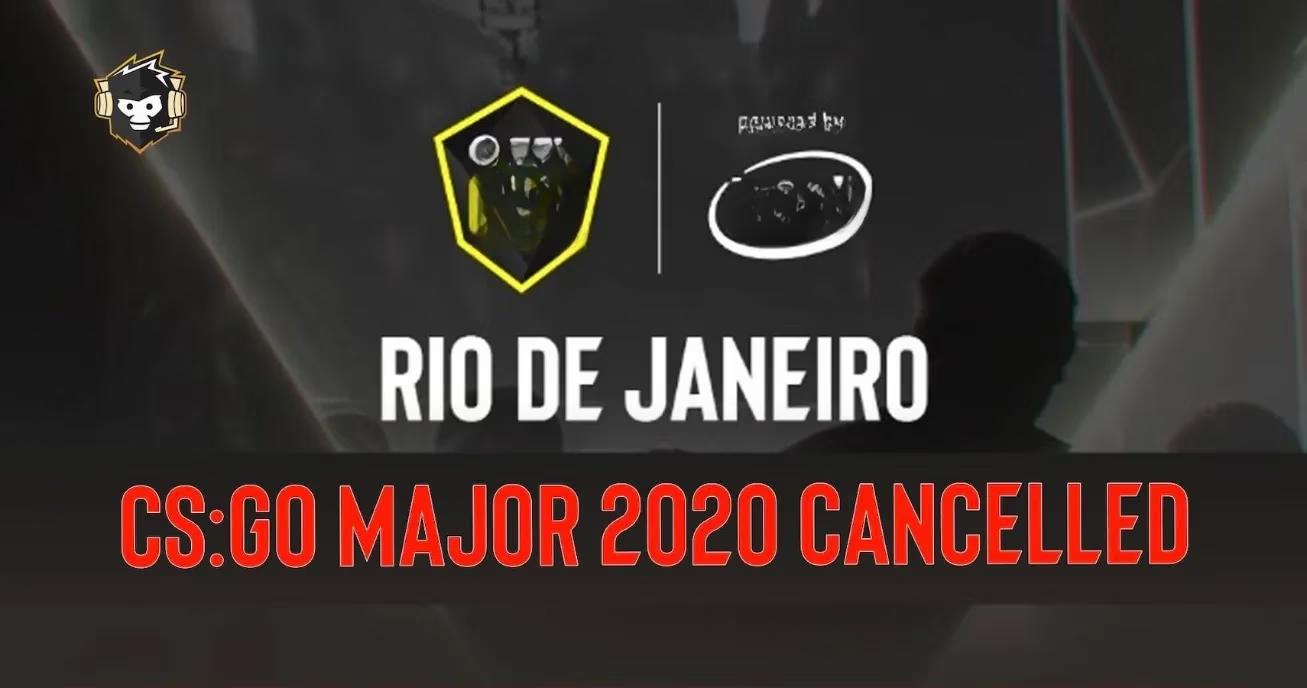
As I sit here in 2026, reflecting on the evolution of competitive Counter-Strike, my mind often drifts back to the pivotal year of 2020. The global landscape was fundamentally altered, and our beloved esports scene was not spared. I vividly remember the collective disappointment that rippled through the community when Valve and ESL made the heart-wrenching decision to cancel the ESL One Rio Major. What was supposed to be a spectacular showcase in Brazil, with its vibrant energy and passionate fans, became a symbol of the unprecedented challenges we all faced. That tournament, carrying a colossal $2 million prize pool and the prestige of being the sole Major of the year, simply vanished from the calendar. It marked the first time since 2013 that the circuit was without a Valve-sponsored pinnacle event, breaking a sacred streak for players and spectators like myself.
The Announcement That Shook the Scene
The official statement from the organizers has stayed with me. They declared, 'We're not going to ask players and fans to risk their health...' This wasn't just about cancelling a tournament; it was a profound statement of responsibility. At the time, the event had already been postponed from its original May dates to a November window, a glimmer of hope we all clung to. Twenty-four elite squads had earned their spots through the grueling 'Road to Rio' regional qualifiers, dreaming of hoisting the trophy. Teams like Europe's Team Vitality and Oceania's Renegades had already secured their coveted slots, their preparation suddenly rendered moot. The decision, while painful, underscored a harsh reality: no game, no matter how globally beloved, was immune to the world's new circumstances.
The Void and The Pivot
With the LAN Majors shelved, the competitive ecosystem faced a daunting question: What now? The answer came in the form of a strategic shift to online competition. Valve and ESL pivoted to focus on the Regional Major Ranking (RMR) events. This system became our lifeline, a way to maintain competitive integrity across the globe's six core regions:
-
North America
-
South America
-
Europe
-
CIS
-
Asia
-
Oceania
These online tournaments determined the hierarchical standing of teams within their regions, keeping the spirit of competition alive even as we were physically apart. It was a different kind of thrill, devoid of roaring crowds but full of its own intense, home-studio drama. ESL's VP, Michal 'CARMAC' Blicharz, channeled the community's sentiment perfectly—expressing deep disappointment but vowing a relentless commitment to bringing back the LAN spectacle we all craved, once safety permitted.
A Legacy of Interruption
Looking back from 2026, the cancellation of the Rio Major wasn't just a missed event; it was a historical bookmark. It interrupted a legacy that had last celebrated a champion at the StarLadder Major: Berlin 2019. That event, held from August to September 2019 in Germany, was the fifteenth CS:GO Major Championship, a testament to the event's steady growth. The Rio cancellation forced a recalibration of what it meant to be a 'Major' and accelerated innovations in how we broadcast and experience top-tier play. The resilience shown by the organizations, players, and fans during that period directly shaped the hybrid online/LAN model that many premier tournaments successfully utilize today. The painful decision of 2020, born from necessity, ultimately contributed to building a more adaptable and robust competitive framework for the future I now enjoy.