
The Counter-Strike community was thrown into a whirlwind of speculation when news broke that Swedish esports icon Freddy "KRIMZ" Johansson had received a Valve Anti-Cheat (VAC) ban. How could a player of such legendary stature, a two-time Major champion and a perennial fixture on HLTV's Top 20 list, suddenly be flagged by the game's most stringent security system? The discovery, made by vigilant fans, immediately set forums and social media alight with theories, confusion, and concern for the veteran rifler's career. In a swift move to address the growing storm, KRIMZ himself reached out through official channels, signaling that this was a situation he intended to resolve head-on.
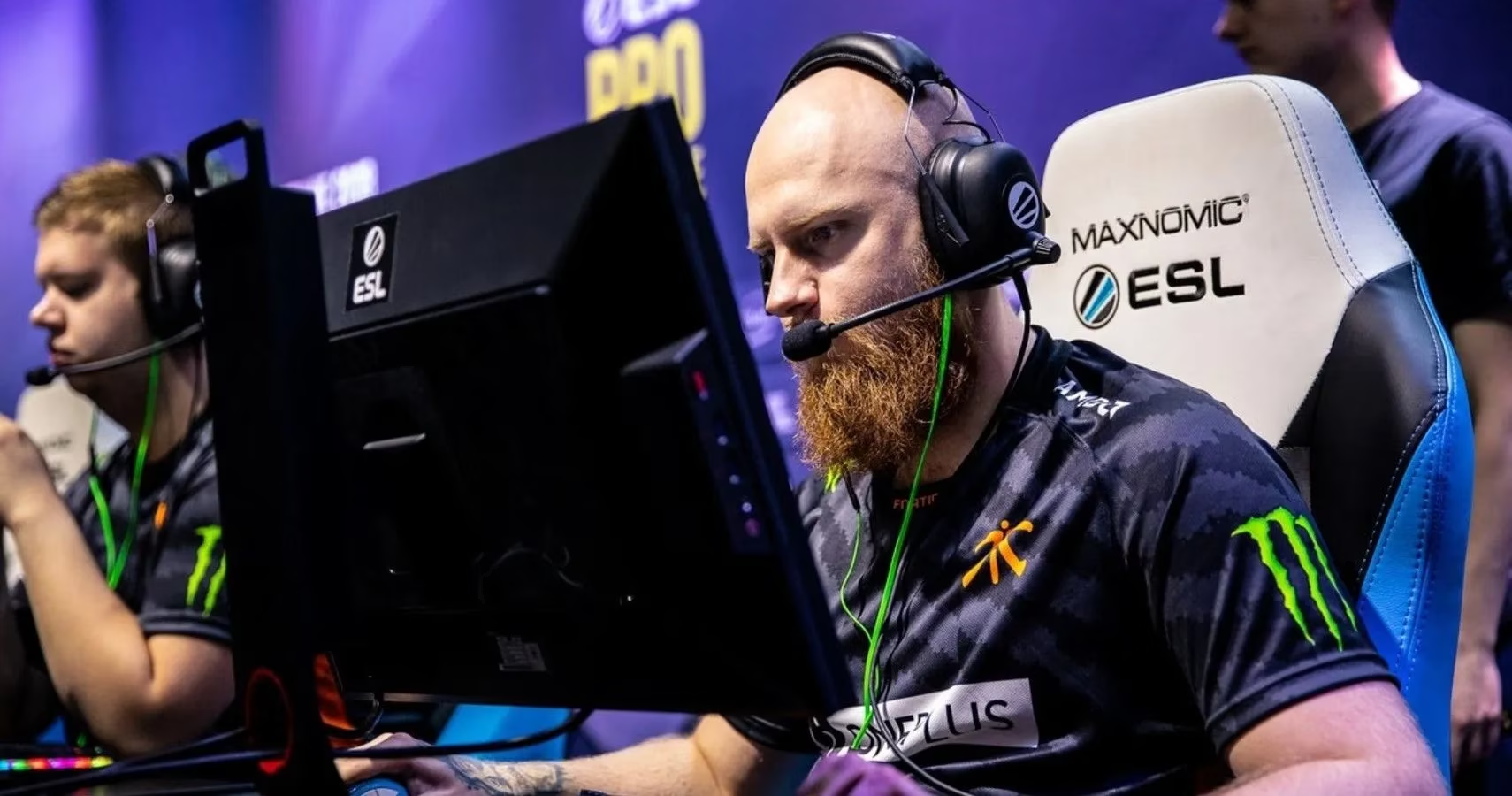
A Legacy Under Scrutiny
KRIMZ's career is a tapestry woven with the colors of Fnatic's historic blue and orange. Having joined the organization in 2014, his name became synonymous with the team's era of dominance. After a brief two-month stint with GODSENT in 2016, he returned to Fnatic, solidifying his status as a cornerstone of Swedish Counter-Strike. His trophy cabinet boasts the most prestigious hardware in the game:
-
🏆 ESL One Katowice 2015
-
🏆 ESL One Cologne 2015
His individual prowess was recognized globally, earning him a place on HLTV's Top 20 players list four times, with his peak coming in 2015 as the world's seventh-best player. Yet, despite this illustrious history, whispers have always lingered in the shadows. For years, KRIMZ and his Fnatic teammates have been the subject of baseless cheating rumors—a common, if unfortunate, narrative that often haunts top-tier competitors. This latest VAC ban, however, transformed those whispers into a deafening roar. Could there be any truth to the old accusations, or was this a glaring error in the system?
The Community's Investigation
As Valve remained silent, the task of investigation fell to the CS:GO community. Reddit and Twitter became digital detective agencies, with fans piecing together potential causes. One prevailing theory pointed the finger at third-party competitive platforms. A prominent suggestion was the Esportal client, described by one user as "the Swedish version of FACEIT." This commenter claimed that the platform's anti-cheat system was notoriously flawed, leading to wrongful bans for multiple users, including themselves. Was KRIMZ simply another casualty of an overzealous or poorly coded external client?
Another line of inquiry focused on changes within CS:GO itself. The game's Trusted Mode was designed to create a more secure environment by blocking other applications from running concurrently. But what if this very feature misinterpreted a legitimate program as a threat? Could a common communication tool, a hardware monitoring app, or even a streaming overlay have triggered the ban? The community was left pondering: In the pursuit of absolute purity, was the system now punishing innocents?
| Potential Cause | Community Hypothesis | Likelihood (Fan Consensus) |
|---|---|---|
| Esportal Client | Faulty anti-cheat on a third-party platform | High |
| CS:GO Trusted Mode | Conflict with legitimate background software | Medium |
| Historical Rumors | Revival of old, unsubstantiated accusations | Low |
| Account Compromise | Unauthorized access leading to ban | Speculative |
The Stakes in 2026
The timing of the ban could not have been more critical. In the modern esports landscape of 2026, a VAC ban is not just a temporary inconvenience; it's a career-threatening event. With franchised leagues, massive sponsor investments, and an ever-watchful public eye, a player's reputation is their most valuable currency. For KRIMZ, a ban meant immediate disqualification from most premier tournaments and could sever ties with long-standing sponsors. Furthermore, his team, Fnatic, was slated to play against Dignitas in a crucial Flashpoint match just days after the ban appeared. The question hung heavy in the air: Would the legend be forced to watch from the sidelines?
The situation highlighted a growing tension in competitive gaming. As anti-cheat technology becomes more sophisticated and intrusive to catch bad actors, where is the line drawn? How many false positives are acceptable in the name of security? The case of KRIMZ—a player with over a decade of clean, top-level play—suggested the system was far from perfect. It begged the question: If this could happen to him, could it happen to anyone?
Awaiting Resolution
As of now, Valve has issued no public statement regarding the ban, maintaining their typical reserved posture in such matters. The ball is in their court to review the evidence, the context of KRIMZ's gameplay history, and the technical data from the alleged infraction. The community's role has shifted from speculation to advocacy, with many fans and fellow professionals voicing their support for KRIMZ, urging for a swift and fair review process.
The saga of KRIMZ's VAC ban is more than just a news story; it's a microcosm of modern esports. It touches on themes of legacy, trust in technology, trial by social media, and the immense pressure on competitive integrity systems. Will this incident prompt Valve to overhaul its appeal and communication process? Only time will tell. For now, a legend waits for vindication, hoping his hard-earned legacy will not be tarnished by what appears to be a digital mistake. The entire scene watches and waits, reminded that in the high-stakes world of professional gaming, even the most revered icons are not immune to the cold, automated judgment of an algorithm.