
As a long-time Counter-Strike: Global Offensive player, I've heard the game's iconic theme music in countless lobbies and highlight reels. But nothing prepared me for the surreal moment it became the soundtrack for a serious news broadcast about a global health crisis. It was 2020, and the world was grappling with the COVID-19 pandemic. In India, a regional news channel in Odisha was doing its part to spread awareness about the virus, lockdowns, and safety measures. However, their well-intentioned segment took an unexpected turn for gamers like me when the familiar, pulse-pounding beats of the CS:GO theme song began to play over graphics showing masked soldiers and 3D renderings of the coronavirus. For a split second, my brain couldn't reconcile the context—was this a new, strangely dark in-game event, or a public service announcement? The 15-second clip, which spread like wildfire online, perfectly captured the bizarre cultural collisions of that era.
Looking back from 2025, that moment feels like a time capsule. It wasn't just a funny meme; it was a symbol of how deeply gaming had woven itself into the global fabric. Here was a hardcore tactical shooter's anthem, originally composed to get players pumped for defusing bombs and securing hostages, being repurposed to underscore the gravity of a real-world lockdown. The channel likely just needed some urgent, tension-building stock music, and the CS:GO track fit the bill a little too perfectly. The irony wasn't lost on the community. We were all living through that same lockdown, and many of us were escaping into CS:GO more than ever. The game had just broken records, surpassing a million concurrent players as people sought connection and competition from their isolated homes. To hear its music while watching the news about the very situation driving us to play was a wonderfully meta experience.
It's funny how the pandemic accelerated trends we're now living with in 2025. Back then, CS:GO's influence was already expanding beyond its own servers. Remember when creative teams rebuilt classic maps like Dust II in other games? That spirit of community creation and cross-pollination has only grown. The incident with the news music was a precursor to gaming's full-blown cultural ubiquity today. Now, it's not unusual to hear game soundtracks in gyms, cafes, or even other media. But back in 2020, it was novel enough to go viral.
The context made it particularly striking. India was facing a serious challenge, with thousands of confirmed cases. The news segment's goal—informing the public—was undoubtedly admirable. The accidental use of CS:GO music didn't undermine that message; if anything, it made it more memorable for a specific, digitally-native audience. It highlighted how the lines between our digital and physical lives were not just blurring, but merging. My friends and I joked that maybe the news director was a fellow player, secretly inserting an easter egg for us. More likely, it was a happy (or hilariously awkward) accident born from a vast, shared digital culture.
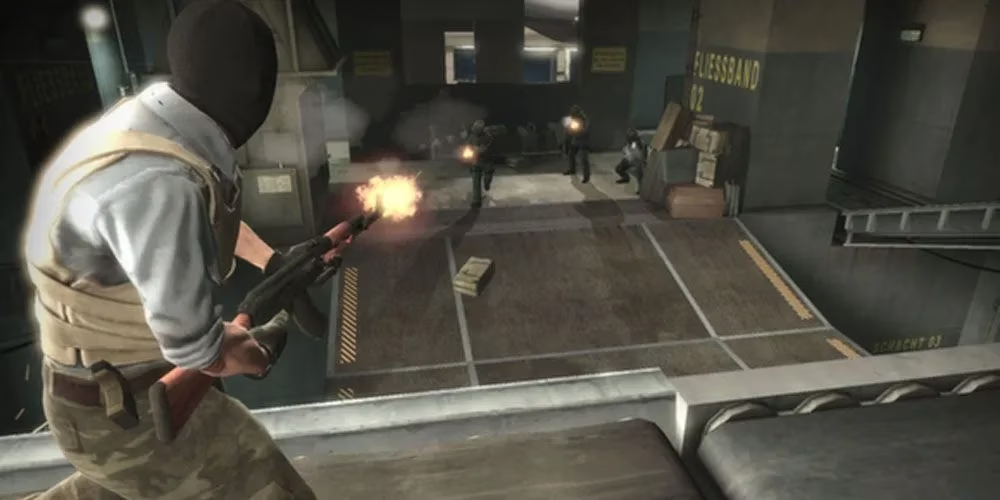
Reflecting on this five years later, the story is less about a goof and more about resilience and adaptation. The pandemic was hard. Businesses, like that arcade in Oregon trying to rent out cabinets, struggled to survive. The gaming world provided a crucial outlet. CS:GO wasn't just a game during that time; for millions, it was a social space, a competitive outlet, and a routine. Hearing its music on the news felt like a weird validation of that importance. It was as if the 'real world' had finally tuned into our frequency, even if by mistake.
So, what does this quirky piece of history tell us about where we are now in 2025?
-
Gaming is Universal Language: A soundtrack from a PC shooter can resonate in a regional Indian news studio. There are no more niche interests, only global cultural touchstones.
-
Community is Key: The story spread because the community spotted it and shared it. That player-driven culture is what has kept CS:GO and its successors vibrant for so long.
-
Context is Everything: The same audio that evokes focus and strategy in a game can evoke tension and urgency in a news report. It's all about the frame around it.
In the end, the Odisha news clip is a perfect snapshot of a unique moment in time. It combined global anxiety, the refuge of gaming, and the unpredictable humor of the internet. As a player, it reminded me that the worlds we build and compete in online don't exist in a vacuum. They spill over, sometimes in the most unexpected ways, into the broader culture. While I hope we never face another pandemic that drives us all indoors and online in the same way, I'll always smile remembering the time Counter-Strike briefly went on a special assignment: informing the public. Talk about a high-stakes match where everyone was trying to defuse the situation.