
Minh Le, the developer known online as “Gooseman,” has every reason to feel proud when he glances at the Steam charts. The mod he helped transform into Counter-Strike has become Counter-Strike 2, and Valve’s tactical shooter still sits almost permanently above the rest. Yet in a 2026 interview with Hellcase, Le admitted he is rarely part of those massive player counts. The creator himself had not played regularly since 2007 or 2008. Still, when Cache finally returned, curiosity pulled him back in.
“I did jump on recently just to play Cache, just to check it out,” Le said. “I was still pretty good even though I haven’t played for more than a decade.” Could there be a better proof of Counter-Strike’s timeless muscle memory? For veterans, the rhythm of counter-strafing, crosshair placement, and map callouts never truly leaves.
Cache’s return was not a quiet one. The map had last been part of the official active pool back in 2019, and its CS2 redesign arrived at the end of April 2026 as the fourth classic arena to receive the sequel treatment. On April 28, the official Counter-Strike account announced the release:
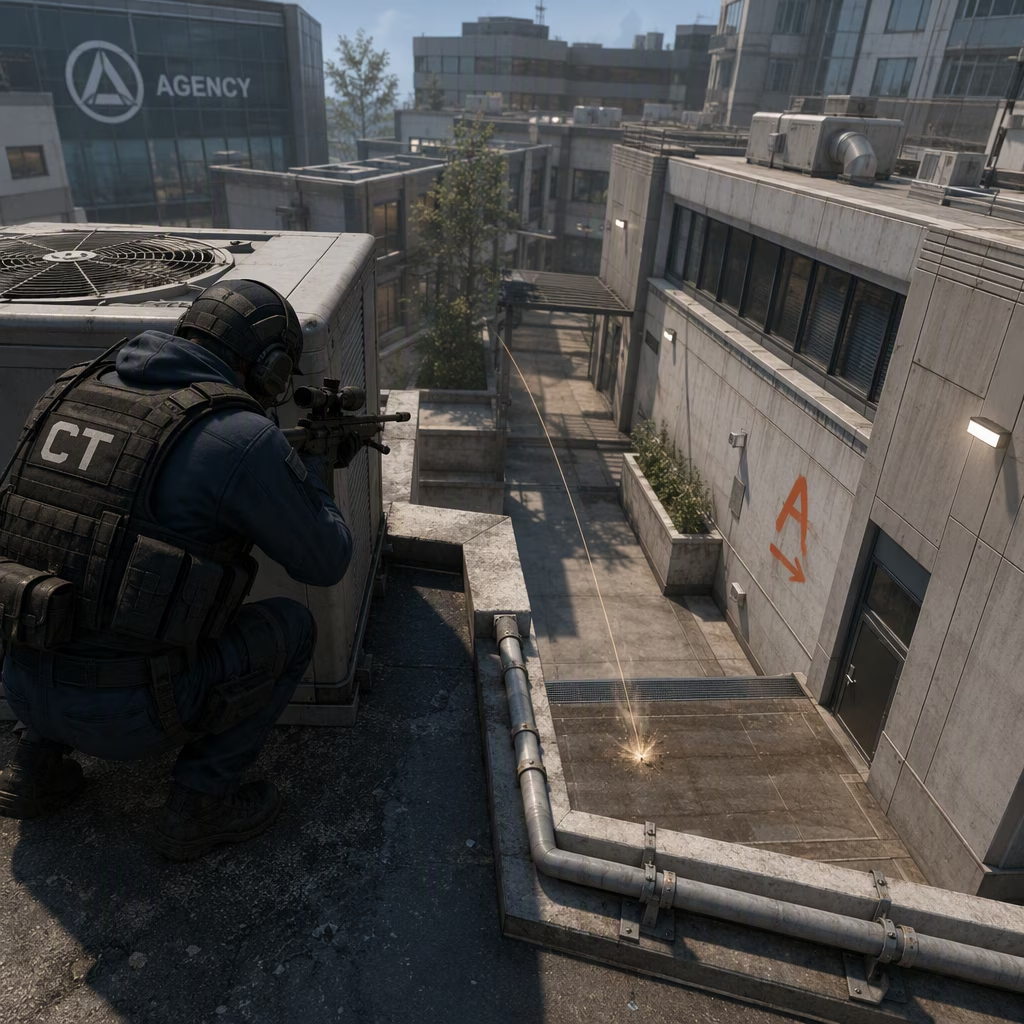
The updated version introduced tighter angles, brighter visuals, and the same tactical identity that made Cache a fan favorite. Whether someone is a weekend player or a former pro, dropping into mid or fighting for control of A main still produces that familiar rush.
Le’s own gaming time has shifted toward Alpha Response, his arcade-style FPS that draws inspiration from ’90s light-gun classics such as Virtua Cop and Time Crisis. The game entered early access in October 2024, and by 2026 the core experience is complete. Le explained that the team is now focused on polish before the 1.0 launch. It is a very different kind of shooter: less economy management, more immediate feedback, and a nostalgic emphasis on fast reactions. Does that mean he has left Counter-Strike behind? Not at all.
Although he does not queue regularly, Le still watches the professional scene with enthusiasm. “I do regularly watch the pro scene,” he said. “I’ve been watching a lot of the recent matches and keeping up with how Vitality has been dominating these days, and it’s kind of cool to watch. It’s amazing how consistent they are, really.”
That consistency has become the story of CS2’s current era. Vitality’s structure, firepower, and mid-round decision-making make them the team to beat. Le did not hide his admiration, but he also has a soft spot for the underdogs. “I love Furia; I really like how they represent the Brazil region, and I kind of root for them because I like to root for the underdogs,” he continued. “It’s a great story and it’s great that CS is so big in Brazil.”
This dual perspective is part of what makes Le’s voice interesting. He appreciates surgical excellence while still loving emotional, crowd-pleasing runs. The Brazilian scene has long brought that energy to Counter-Strike, with Furia acting as its modern spearhead. In a game often defined by cold utility usage and precise executes, their aggressive style can be a welcome jolt.
Could Le himself climb back to a high rank if he committed to CS2 again? He declined to guess. In 2008 he believed he was in the top five percent of players, but time away has left him rusty. He has not checked his rating because regular play simply is not part of his routine. It is a humble admission from someone whose creation has shaped competitive FPS for more than two decades.
The conversation also touched on practical elements that modern players obsess over. From crosshair customization to skin markets, CS2 has expanded far beyond the raw gunplay Le once built. Modern CS2 still revolves around familiar obsessions:
-
Crosshairs: Players endlessly tune size, gap, color, and style to find the perfect setup.
-
Skins: The market remains a living economy, with items ranging from a few cents to thousands of dollars.
-
Map pool: Returning classics like Cache bridge the gap between old and new generations.
In 2026, the ecosystem around Counter-Strike feels like a living economy, yet the core remains unchanged: two teams, one objective, and endless room for individual heroics.
Perhaps the larger question is whether CS2 can continue to welcome both returning legends and new players. Cache’s revival suggests yes. Older maps are not just remastered; they become bridges between generations. A player who stopped in 2008 can install the game in 2026, recognize a bombsite, and instantly remember why Counter-Strike mattered. For Minh Le, that brief return may not become a regular habit, but it confirmed something important: the game he helped create still knows how to call him back.
Looking ahead, Alpha Response’s 1.0 launch will give Le a chance to introduce a fresh audience to a different philosophy of shooting games. Meanwhile, CS2 will keep marching forward with new map redesigns, shifting metas, and a professional scene that never stops producing stories. Whether he is polishing an arcade shooter or watching Vitality dismantle another opponent, Gooseman remains both a creator and a fan. And that, perhaps, is the best ending to the story: the person who helped start it all still cares enough to queue into Cache, just to check it out.