
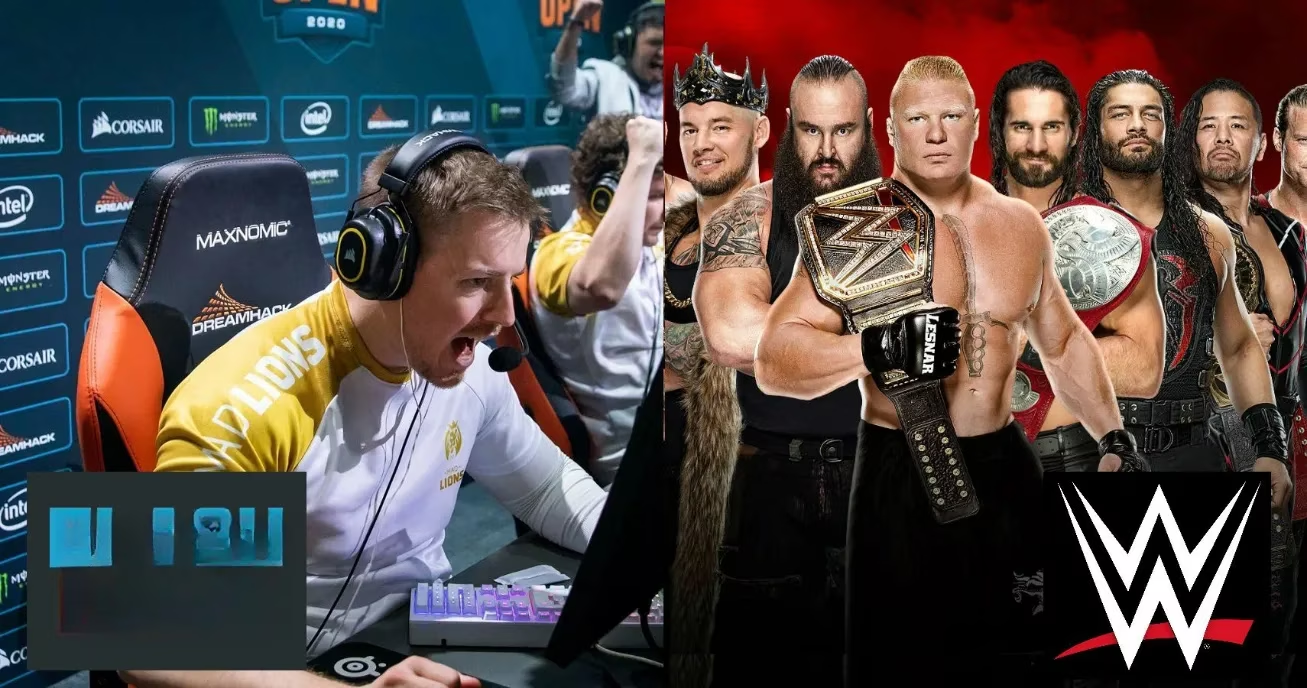
In the high-stakes world of esports, where raw skill often overshadows charisma, Flashpoint, the team-owned Counter-Strike: Global Offensive league, decided to throw a wild curveball. By 2026, their initial promise to create a "fresh and entertaining" league had evolved into a full-blown experiment in personality engineering, courtesy of a rather unorthodox hire: a former WWE writer. Flashpoint's bold move was less about scripting chair shots and more about helping its roster of players find their inner rockstar, hoping to turn up their real personas to eleven in a scene often criticized for being as dry as a bone. The league's vision, from its inception, was to craft an adult-oriented entertainment spectacle inspired by the bombastic worlds of UFC and WWE. This hiring was their attempt to walk the walk, not just talk the talk.
The Big Reveal and the Initial Skepticism
The announcement was made during a now-legendary Flashpoint Twitch livestream featuring commentators Christopher "MonteCristo" Mykles and Duncan "Thorin" Shields. As MonteCristo explained the writer's role—"to work with the players to help them develop their personalities in the same way he literally worked with WWE"—the reaction from their guest, Envy Gaming CEO Mike "Hastr0" Rufail, was priceless. He couldn't resist a classic bit of banter, joking, "So, is he gonna be like, 's0m, this is the part where you grab a chair and crack it over Nifty’s head'?" The quip got a hearty laugh, but it also highlighted the fine line Flashpoint was trying to tread. Thorin, a veteran esports pundit, later admitted his own initial concerns, noting, "I was actually concerned when I heard we were bringing in a real WWE writer cause obviously the WWE does go too silly sometimes." The fear was real: would this turn CS:GO into a cringe-fest of fake drama and scripted trash talk?
The Reassuring Pitch: Authenticity on Steroids
However, a meeting with the new writer assuaged those fears. Thorin recounted a key insight from their conversation: "the best wrestling characters actually are the ones that are the person, but just turned up to 11." This became the guiding philosophy. The goal wasn't to create fictional alter egos but to identify and amplify the most compelling, marketable traits already present in each competitor. Think of it as personality coaching for the digital colosseum. Flashpoint wasn't looking for actors; they were looking for archetypes—the stoic strategist, the fiery rookie, the unflappable veteran—and giving them the tools to own that narrative. In a landscape where many pros are famously reserved, this was a gamble on human interest as much as it was on gameplay.
The Business Behind the Brawn
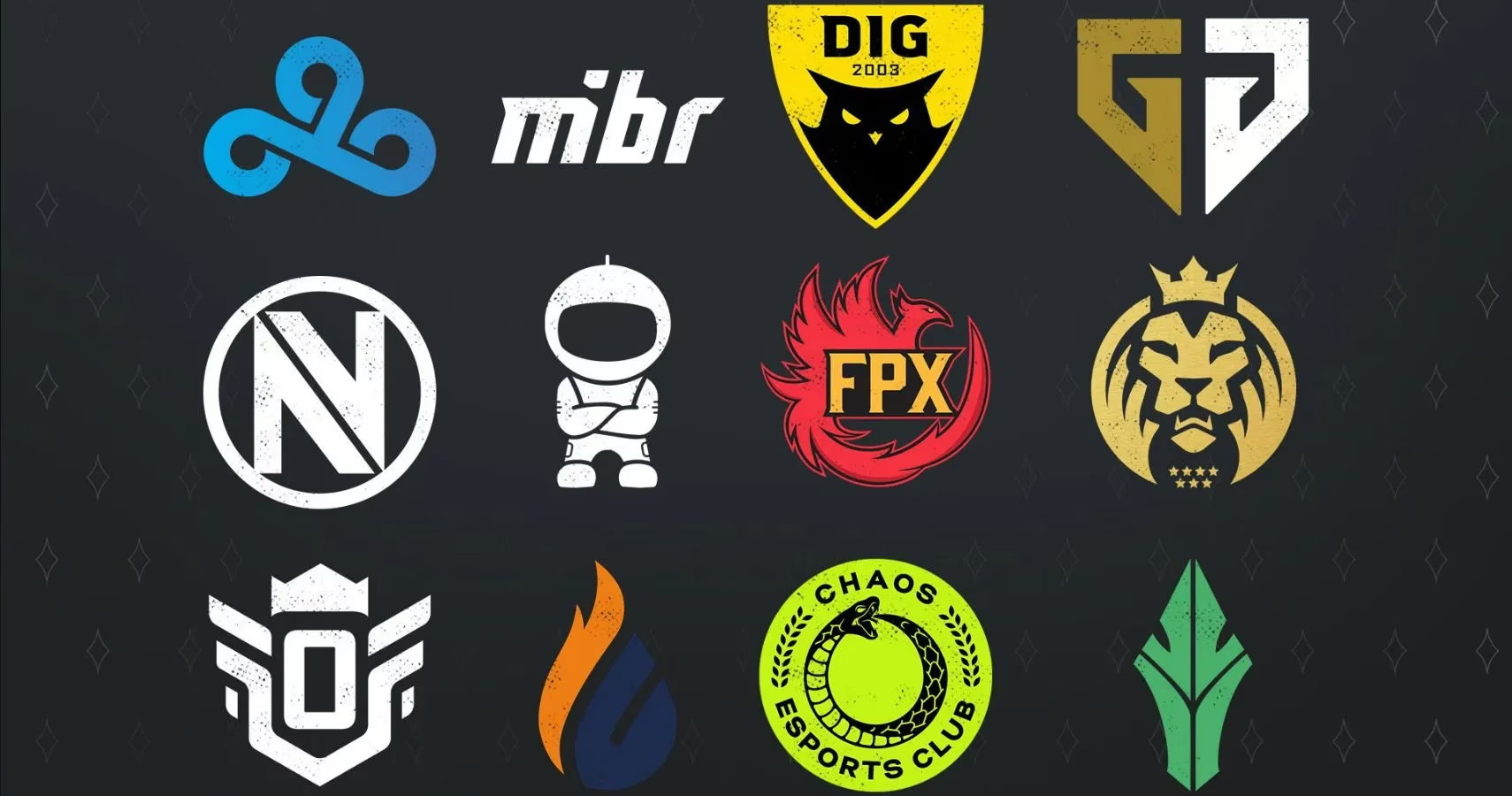
Let's break down the cold, hard logic, folks. Flashpoint's roster, on paper, often lacked the instant name recognition of giants in leagues like the ESL Pro League. They weren't playing with house money from a massive parent company; they were an independent, team-owned venture. This structure, with "no overhead company taking chunks of the profits," was a double-edged sword. It meant tighter budgets but also unique freedom. They could allocate resources creatively, and investing in player branding and storytelling became a strategic priority. The league's thesis was simple: Star power sells tickets (and sponsorships). If they couldn't buy established superstars, they would build their own. By 2026, this approach had become a defining feature, setting them apart in a crowded market.
Here’s a quick look at what Flashpoint was betting on versus the traditional model:
| Traditional Esports League | Flashpoint's "Personality-First" Approach |
|---|---|
| Focus primarily on competitive results & gameplay. | Focus on competitive results AND player narratives. |
| Player personas often develop organically (or not at all). | Active development of player personas through media training & storytelling. |
| Broadcasts centered on analysis and match flow. | Broadcasts incorporate player backstories, rivalries, and human-interest angles. |
| Marketing relies on team brands and tournament prestige. | Marketing leverages individual player stars as much as team brands. |
Walking the Tightrope: Potential for Epic Backfire
Make no mistake, this strategy was, and still is, fraught with peril. The esports community has a razor-sharp cringe detector. Forced storylines, cheesy player introductions, and inauthentic trash talk could have made Flashpoint a laughingstock faster than you can say "scripted promo." The risk of alienating the core, purist fanbase who just want to see top-tier CS:GO was enormous. It was a high-wire act without a net. Would players feel pressured to be someone they're not? Would rivalries feel manufactured? The potential for it to all go pear-shaped was a constant topic of discussion on forums and social media.
The Legacy and The Verdict
So, where does this bold experiment stand in 2026? Flashpoint's gamble on a WWE-style narrative architect was never about turning Counter-Strike into a soap opera. It was about recognizing a gap in the market—the charisma gap—and trying to bridge it. In a world where every pro can click heads, what makes one stand out? Often, it's the story. By empowering players to own and project their personalities, Flashpoint aimed to create deeper connections with the audience. The league was, by its very nature as a team-owned entity, a barrier-breaking product. This move was just another extension of that ethos, an attempt to shatter the typical, often monotonous, esports mold.
Did it work? Well, that's the million-dollar question. The results have been a mixed bag, but the impact is undeniable. Some players have blossomed into genuine fan favorites with recognizable brands, while others preferred to let their gameplay do the talking. The league learned that you can't force a personality, but you can certainly help cultivate one. In the end, Flashpoint's legacy might not be in championship trophies alone, but in pushing the entire industry to consider that in the battle for viewers' hearts and minds, sometimes you need more than just a killer aim—you need a killer character, too. Only time will tell if this script has a happy ending, but you've gotta admit, it's one hell of a plot twist. 😉