
Let me tell you, the world of professional eSports, particularly Counter-Strike: Global Offensive, has been under a massive microscope lately. And it's not just the usual tournament organizers or league commissioners looking closely; we're talking about the big guns now. The eSports Integrity Commission (ESIC) has some new, powerful allies in their fight against the dark side of competitive gaming – the Federal Bureau of Investigation. It’s a development that shows just how seriously this issue is being taken. For a long time, whispers about match-fixing felt like an open secret, something that happened in the shadows. But now, those shadows are being flooded with light, and the consequences for anyone caught in the web of corruption are more real than ever.
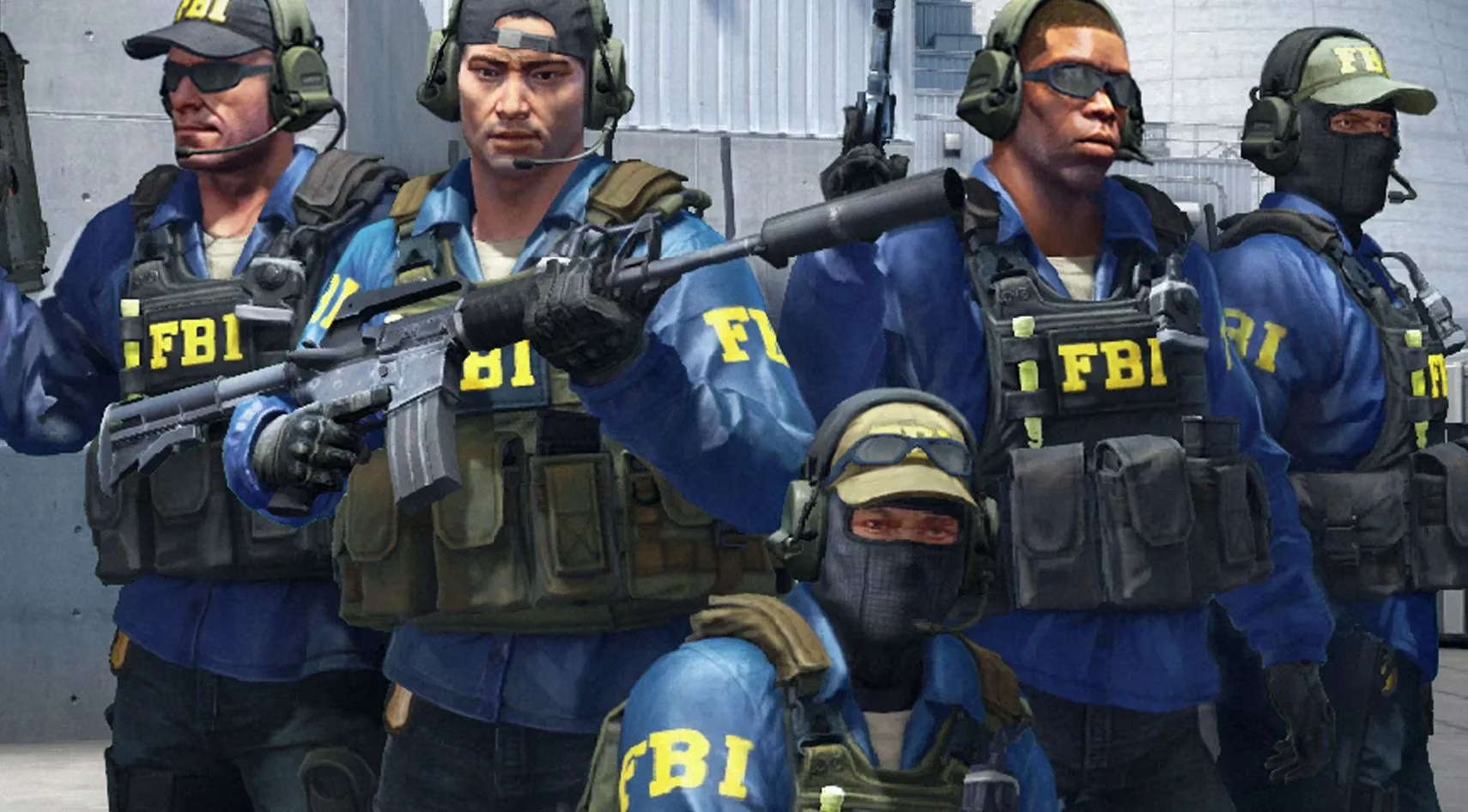
So, what exactly are they investigating? According to the latest reports, the focus is on "a relatively small but significant group of players over a long period of time, organizing match-fixing in North American MDL." Let's be crystal clear about what match-fixing entails. It's not just having a bad day on the server. It's a deliberate, fraudulent act where players are bribed—often by betting syndicates or wealthy individual gamblers—to intentionally lose a match or predetermine the outcome. They don't do this willingly; it's usually under the pressure of financial incentives or threats. Think of it like a classic sports movie trope: the athlete being paid to take a dive. Now, translate that to the digital arena of CS:GO, where millions of dollars in bets are placed. The integrity of the entire sport is on the line.
What's fascinating is the ESIC's perspective on working with the FBI. They've mentioned that the FBI's sports betting investigative unit is a relatively new creation. "They're good, but they're inexperienced because sports betting has never been a big thing in America until recently, so everybody's kind of finding their feet on that one." This collaboration represents a pivotal learning moment for law enforcement as they adapt to the complexities of modern, digital-age fraud. It’s a global issue, and no single country is immune. For instance, a parallel inquiry is underway in Australia, stemming from a case earlier where the ESIC sanctioned 35 CS:GO players for breaching the Anti-Corruption Code. The commissioner there hinted that major announcements could be imminent.
The ripple effects of this crackdown are spreading beyond just CS:GO. Game publishers themselves are taking proactive, stringent measures. Riot Games, for example, has launched its own internal probe into former CS:GO professionals who have transitioned to the Valorant competitive scene. They're preemptively interviewing players they suspect might be implicated in the wider ESIC anti-corruption investigation. This shows a commendable, zero-tolerance approach from within the industry itself. It's a multi-front war against deception:
-
Law Enforcement Front: The FBI bringing federal investigative power.
-
Integrity Commission Front: The ESIC applying industry-specific knowledge and codes.
-
Publisher Front: Companies like Riot safeguarding their own ecosystems.
The goal is unanimous: to dismantle these fraudulent betting schemes and restore faith for the fans, the legitimate players, and the sponsors who pour resources into these leagues. The message in 2026 is louder than ever: if you compromise the integrity of the game for personal gain, you're no longer just risking a ban from a tournament organizer. You're risking serious legal repercussions that could extend far beyond your gaming career. The era of impunity for match-fixing in eSports is, without a doubt, coming to a close.