
Counter-Strike players got a compact update from Valve that looked modest on paper but reached into several areas competitive players care about: grenade timing, inventory clarity, map visibility, footstep audio, and demo playback. The patch did not arrive with a flashy new operation or a sweeping weapon balance pass. Instead, it focused on the kind of fixes that quietly shape rounds: whether utility lands where it should, whether a starting pistol appears in the menu, whether a shadow reads correctly, and whether a railing sounds like a railing. For a game built on split-second decisions, those details matter. 🎯
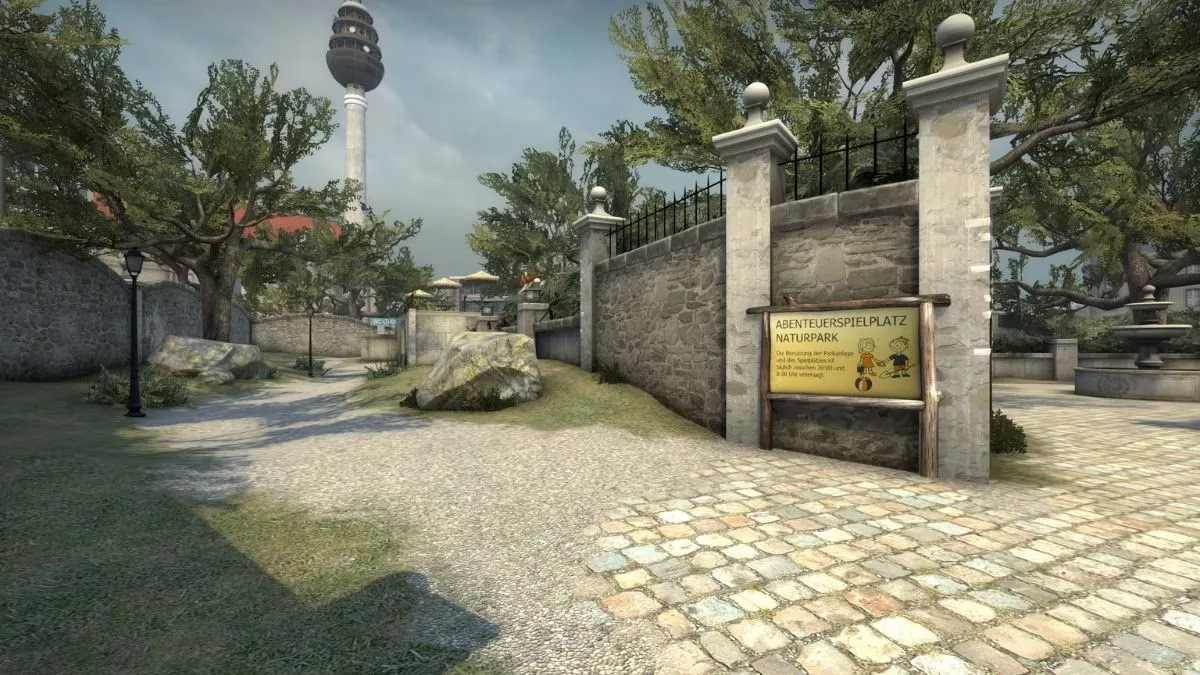
🎯 Gameplay fixes that change round outcomes
The headline fix for many players was the grenade-throw and weapon-switch interaction. Previously, a player could click the fire button to throw a grenade and then switch weapons quickly, only to see the throw fail. That might sound like a niche edge case, but it had real consequences. Lineups depend on precise timing. Coordinated executes depend on utility landing when the team expects it. Retakes depend on a flash, smoke, or molotov arriving exactly as the swing begins. When a fast weapon switch could cancel the throw, players were punished for doing something that felt natural under pressure.
Valve’s fix changes that behavior. Once the player releases the fire button, the grenade is launched in the intended direction. Weapon switching after that release no longer cancels the throw. The one exception is a round restart, which can still cancel the action. That distinction matters because it keeps the fix grounded in normal play while preserving the reset behavior that comes with a new round. For players who practice utility in empty servers and then try to recreate it in a live match, the change should make the game feel more predictable.
The update also fixed an issue where the player’s shadow would sometimes show an incorrect animation state. That is another small line item with a larger visual impact. Shadows are part of how players read movement and positioning, especially when peeking or holding an angle. If the shadow tells a different story than the model, it adds noise to an already noisy information space. Valve also mentioned various animation system optimizations and minor demo playback bug fixes. Demo playback may not be glamorous, but it is essential for reviewing rounds, preparing strategies, and settling debates about what actually happened in a clutch. 🧐
🧰 UI cleanup: starting pistols return to the Pistols tab
The UI section of the patch notes is short but practical. Valve fixed a bug where starting pistols were not showing in the Pistols tab of the Equipment view. That bug may not have changed damage values or movement speed, but it did make the inventory screen less trustworthy. Players expect the Equipment view to be a clear reference point. When a starting pistol is missing from the Pistols tab, the menu stops matching the game. The fix restores that basic clarity, and it is the sort of quality-of-life correction that players notice more when it is absent than when it works. ✅
🗺️ Map changes: visibility, audio, and workshop stability
The map section touched several active-duty favorites. Most of the changes were focused on better visibility and sounds, which is a familiar theme for Counter-Strike updates. A map can look beautiful and still play poorly if a sightline is muddy, a footstep cue is wrong, or a prop disappears in a way that distracts from the fight. Valve’s notes spread across Nuke, Inferno, and Dust2, while Mirage, Anubis, and Vertigo also appeared in the map list.
| Map | What changed |
|---|---|
| Nuke | Fixed the sun material not blooming and adjusted the material size. Cleaned up redundant skins on metal_door models to prevent workshop mappers from hitting fatal errors for missing assets. Fixed a visibility bug at Garage when looking toward Hell. Changed railing collision properties so they emit the correct footstep sounds. |
| Inferno | Changed railing collision properties so they emit the correct footstep sounds. Fixed an issue where some chimney models would disappear in the skybox. |
| Dust2 | Listed in the map section, though the public notes did not spell out a specific line item. |
| Mirage, Anubis, Vertigo | Also included in the update’s map list, but the circulated notes did not detail individual changes. |
Nuke’s changes are a good example of how technical fixes can affect both ordinary players and creators. The sun material fix is about visual consistency, while the metal_door cleanup is about preventing workshop mappers from running into fatal errors caused by missing assets. That second point matters because Counter-Strike’s community maps and custom modes are part of the game’s long-term health. The Garage visibility bug toward Hell is more direct: if a player cannot read an angle clearly, the map is asking them to guess. The railing collision change is subtler but equally practical. Footstep audio is information. If a railing produces the wrong sound, players can misread an opponent’s position or movement.
Inferno received a similar railing audio fix, plus a skybox issue involving chimney models disappearing. A disappearing model can break immersion, but in a competitive shooter it can also pull attention away from the fight or make a familiar callout look different from what players expect. Dust2 appeared in the update’s map list as well, although the public notes did not provide a detailed line item. Mirage, Anubis, and Vertigo were also named in the map section without granular explanations in the circulated notes. For players tracking every angle, that means the best approach is to test the maps in-game and compare notes with teammates rather than assume a listed map was untouched.
🧩 Why this small patch matters in 2026
By 2026, Counter-Strike players have become used to updates that mix balance changes, map tweaks, and technical cleanup. This patch fits that pattern. It is not a season-defining release, but it addresses the kind of friction that builds up over hundreds of matches. A grenade that fails after a fast switch can cost a round. A missing starting pistol in the Equipment view can confuse a new player. A bad footstep cue on a railing can turn a clean read into a guess. A demo playback bug can make review sessions harder than they need to be. Valve’s changes do not rewrite the game, but they make the game more reliable. For a tactical shooter, reliability is not a minor feature. It is the foundation. 🔧