
It’s 2026, and the conversation about video games in China feels like a long, winding road with unexpected detours. I remember the hopeful buzz a few years back when the licensing backlog finally started to clear – it was like a dam had broken, and we all thought smoother waters were ahead. But then, the State Administration of Press and Publication dropped the hammer again, and honestly, it wasn't a total shocker. We've been here before. The government’s deep concerns about violence and gambling influencing the younger generation led to stricter rules, and the industry had to scramble. It’s a familiar dance, but the steps keep getting more complex.
The Core of the Crackdown
Let’s break it down. The two big no-nos are:
-
Gambling Mechanics: This one’s a biggie. The ban targets any in-game systems that mimic real-money gambling, like loot boxes with random rewards that can be traded for cash value. The government views this as a direct gateway to addiction, and given the past issues with illegal gambling rings, they’re not taking any chances.
-
Graphic Violence: Gone are the days of turning blood green to sneak past censors! The new rules are far more stringent. Realistic depictions of blood, gore, and even corpses are now explicitly forbidden. It’s not just about color palettes anymore; the very presence of certain violent elements can get a game rejected.
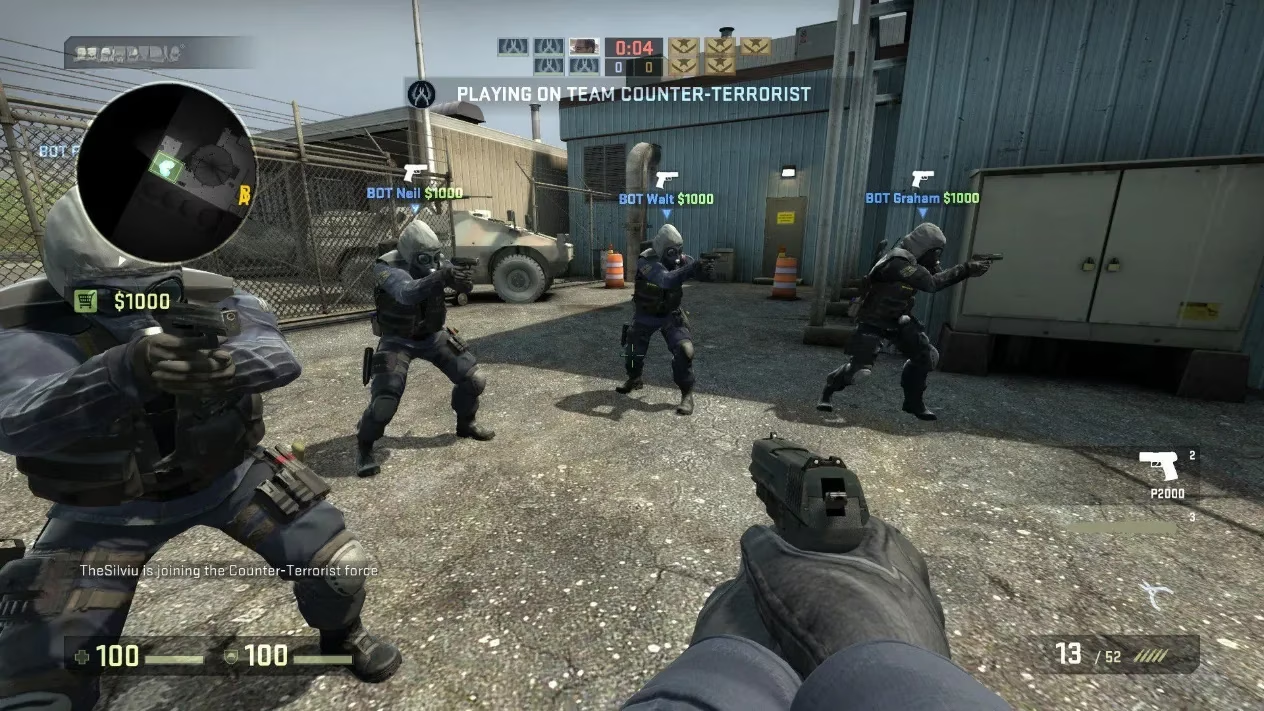
This move has forced developers, both domestic and international, to completely rethink their content. For a game like Counter-Strike: Global Offensive, which finally made it to China through a partnership with Perfect World, it meant a major overhaul. No more fallen soldiers lying around – they had to just... poof, disappear. It feels a bit surreal, doesn't it?
Why This Path? The Government's Perspective
From the outside, it might seem overly restrictive, but I try to see their side. The government's primary stated goals are:
-
Protecting Youth: Shielding minors from content deemed harmful is the top priority.
-
Curbing Addiction: Preventing gambling-like mechanics from taking root.
-
Maintaining Social Harmony: Ensuring games don't promote values or themes considered socially unacceptable or politically sensitive.
Their approach, however, is what causes friction. Instead of implementing a robust, enforceable age-rating system that restricts access to mature content, the policy often removes that content altogether for everyone. It’s a blanket solution. Some in the community call it a 'knee-jerk reaction' to internal pressures, and hey, they might not be wrong. It sometimes feels like we're all being treated as one homogenous group, with no distinction between a teenager and an adult player.
The Ripple Effect on Game Development
This environment creates a unique development landscape. Here’s a quick look at the before-and-after for common elements:
| Game Element | Old Workaround (Pre-2020s) | New Reality (Post-Crackdown) |
|---|---|---|
| Blood/Gore | Change color to blue/green; reduce splatter. | Complete removal of realistic depictions; often replaced with sparkles or simply no effect. 😅 |
| Corpses/Death | Leave bodies as inert objects. | Bodies must vanish instantly or be replaced by non-humanoid objects (e.g., a crate). |
| Loot Boxes | Market as "surprise mechanics" with unclear odds. | Heavily regulated or removed; rewards must be transparent and non-tradable for real-world value. |
| Political Themes | Avoid direct references; use allegory. | Any direct or perceived reference to sensitive topics leads to an instant ban. |
The creativity now goes into avoiding certain visuals rather than creating them. It’s a weird pivot for an artistic medium.
A Glimmer of Hope? The Esports Factor
But here’s the thing – it’s not all doom and gloom. The explosive growth of esports in China is a powerful force. Games like League of Legends and Dota 2 (in their approved forms) are national phenomena. The government recognizes the economic and cultural capital in competitive gaming. This creates a paradox: they want to promote esports, but the source games often come from genres that naturally include conflict.
This tension might be the key to future change. There's a lingering hope that as esports become even more mainstream and institutionalized, the rules might relax for officially sanctioned competitive titles. Maybe a separate classification for "esports-ready" games with stricter age-gating could emerge. It’s a big "if," but the multi-billion dollar industry isn't going anywhere, and that has a way of influencing policy... eventually.
Living in the New Normal
So, where does that leave us players and followers of the scene in 2026? We adapt. We play the versions of games that are available, often feeling like we're experiencing a slightly alternate universe version of a global hit. The international gaming community sometimes looks at us with a mix of pity and confusion, and I get it. It can be frustrating.
Yet, the passion for gaming here is undimmed. Developers are finding clever, subtle ways to tell stories and design mechanics within the boundaries. It’s a different kind of challenge. The government's stance is clear for now, and while the dream of a mature rating system feels distant, the sheer momentum of gaming culture in China makes me think this story is far from over. The road might be winding, but the journey continues, one censored explosion at a time.