
I still remember the first time I booted up Counter-Strike. It was 2003, and a friend had burned a CD with the mod after reading about it in a magazine. The gun sounds, the round-based tension, the simple act of planting a bomb or defusing it under fire – I was immediately hooked. Now, in 2026, as the game officially marks its 25th anniversary, I find myself reflecting on how a humble Half-Life mod became the undisputed king of competitive shooters.
The official Counter-Strike account marked the milestone with a heartfelt message: “Happy 25th birthday to the greatest videogame ever made, Counter-Strike. A Half-Life mod which has spawned communities, created memories, and established the greatest esport of them all. We’re grateful to have the most passionate players in gaming. Here’s to 25 more!” That passion is what makes CS special. It’s not just a game – it’s a shared language across generations of PC gamers.
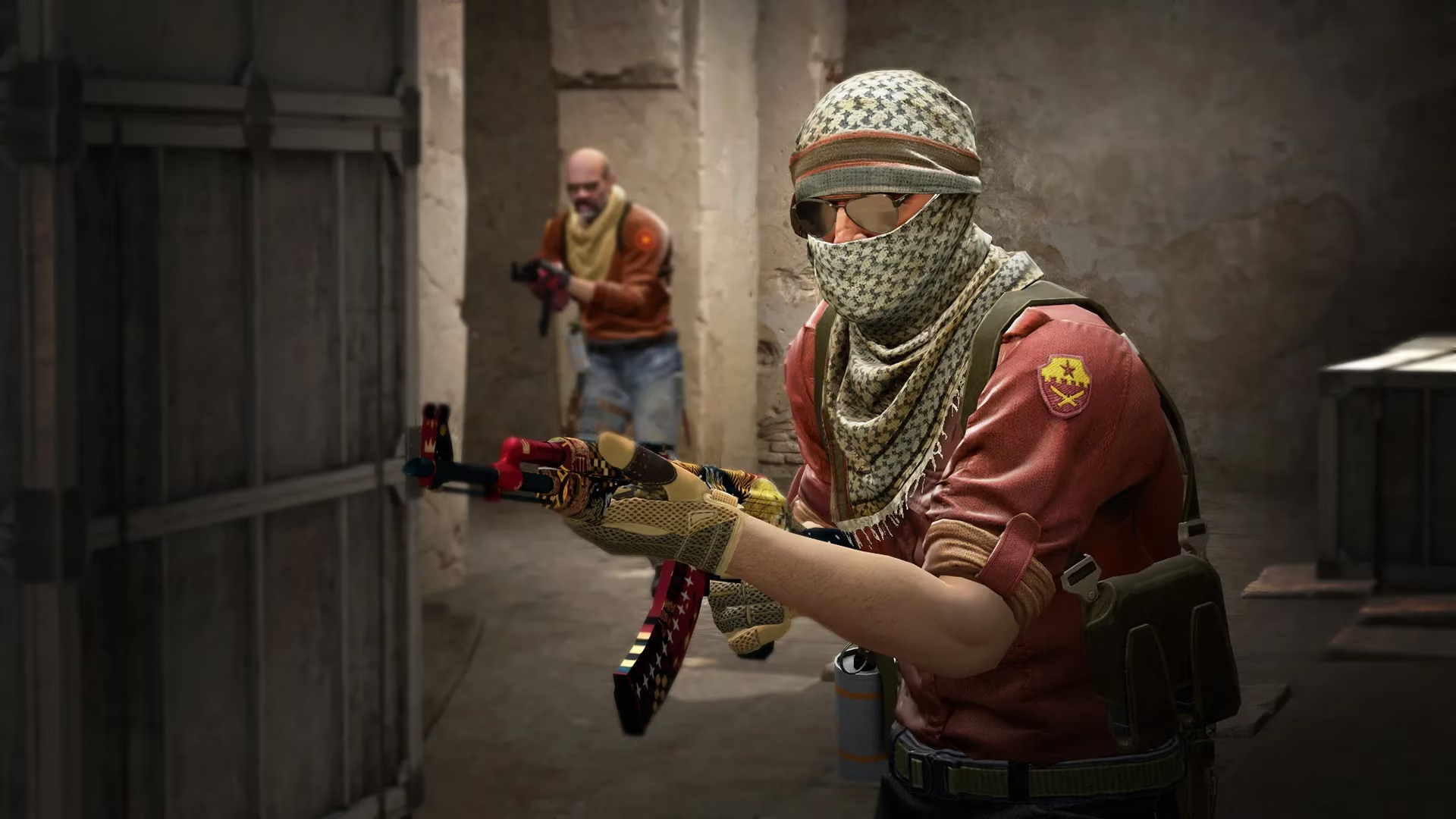
The roots of Counter-Strike go back to 1999, when Minh “Gooseman” Le, then finishing university, wanted a project to boost his career prospects. He had previously built mods for Quake, but this time he chose Valve’s GoldSrc engine. Once the software development kit became available, it took him just a month and a half to program “beta one”. By then, Jess “Cliffe” Cliffe had joined to help with maps and other elements. Le’s fascination with special military units and games like Tom Clancy’s Rainbow Six gave CS its iconic terrorist-versus-counter-terrorist theme.
Beta 1 dropped on June 19, 1999, and the community exploded. By beta 5, interest was so intense that Valve approached the two creators, bought the IP, and hired them both. The first retail version launched in September 2000, and the rest is history. The game evolved through Condition Zero, Source, Global Offensive, and finally Counter-Strike 2 in 2023, which seamlessly replaced CS:GO while carrying over its entire economy and player base.
One of the most nostalgic aspects of the 25th anniversary has been the flood of memories from players who discovered CS through magazine cover disks. I came across a user on social media who wrote, “Still remember playing it in first beta on LAN from CD you got with PC magazine. I guess it means I’m old.” Another shared, “I have the PC Gamer DVD with Beta 5 on it, along with the first PCG review written by Chris Auty. It’s from April 2000… PC Gamer magazine used to have a DVD or CD on the front cover for demos, updates, mods etc. This was before the days of widespread DSL coverage so buying a magazine for file updates was really popular.” As someone who grew up in a country where fast internet arrived late, those magazine discs were pure gold. I remember rushing to the newsstand every month just to grab the latest updates without frying my family’s phone line.
Fast forward to 2026, and Counter-Strike 2 has only tightened its grip on the FPS throne. According to the latest official numbers, the game still boasts nearly 28 million monthly players and dominates the Steam charts. Since its launch, Valve has been methodically adding quality-of-life features and even teased significant weapon additions. The competitive scene remains as vibrant as ever: Major tournaments pack arenas, and household names like s1mple and ZywOo continue to inspire millions.
But beyond the esports lights, Counter-Strike has always been a factory for wild, unforgettable stories. Who can forget “Door Stuck!” – that delirious video from 2006 where a player gets wedged in a doorway and chaos ensues? It’s still my favorite piece of gaming internet history. Then there are the legendary skins: a single Dragon Lore AWP can change hands for the price of a new car. And the community’s sense of humor remains mercilessly sharp. One joke that went around during the anniversary read, “Damn, Leonardo DiCaprio gonna quit playing this game,” a nod to CS now being old enough to date the actor. I’ve also seen players share tales of insane luck in case openings, or that one guy who managed to get banned for life twice and tried to blame it on cannabis.
What truly amazes me is how Counter-Strike bridges generations. I’m now teaching my nephew the angles on Dust II, the same map I learned on. The core loop – buy, execute, clutch – hasn’t changed, yet Valve keeps finding ways to make it feel fresh. The game has spawned countless clones, but none have matched its blend of precision, strategy, and sheer adrenaline.
Looking back at 25 years, it’s clear that Counter-Strike is more than just a videogame. It’s a cultural institution built by a community that cares deeply about every bullet whizzing past their ear. Here’s to 25 more years of headshots, frags, and the sweet sound of “Counter-Terrorists win” echoing through our headsets.